
1. Executive Overview: The Paradigm Shift from Dissipative to Regenerative DC Loading
As global power electronics transition toward mega-watt (MW) scale electrification, traditional linear and resistive DC electronic loads have reached a critical thermal and operational bottleneck. In conventional testing environments—ranging from Electric Vehicle (EV) battery pack burn-in to multi-kilowatt AI server Power Supply Unit (PSU) validation—100% of the drawn electrical energy is converted directly into waste heat. This creates a compounding financial penalty: facility managers pay once for the utility electricity to run the Device Under Test (DUT), and pay a second time for industrial HVAC systems to extract the resulting heat from the laboratory floor.
A Regenerative DC Electronic Load fundamentally alters this economic equation. By combining a programmable precision DC current sink with a grid-tied Active Front-End (AFE) inverter, a modern regenerative load extracts electrical energy from the DUT and recycles up to 93% of it back into the local facility AC mains. This bidirectional power conversion architecture reduces net utility consumption, eliminates expensive chillers, and drastically drops corporate carbon footprints—making it an indispensable asset for tier-1 OEMs and automated production lines worldwide.
Information Gain Insight: The Dual-Benefit OPEX Impact
For every 100 kW of continuous continuous-load testing using traditional air-cooled loads, approximately 28.4 tons of refrigeration (100 kW of thermal dissipation = 341,214 BTU/hr) are required. By upgrading to a Chroma Regenerative DC Electronic Load with 93% efficiency, thermal dissipation drops from 100 kW to just 7 kW. This saves up to $142,000 annually in combined electricity and HVAC cooling overhead under 24/7 operating schedules.
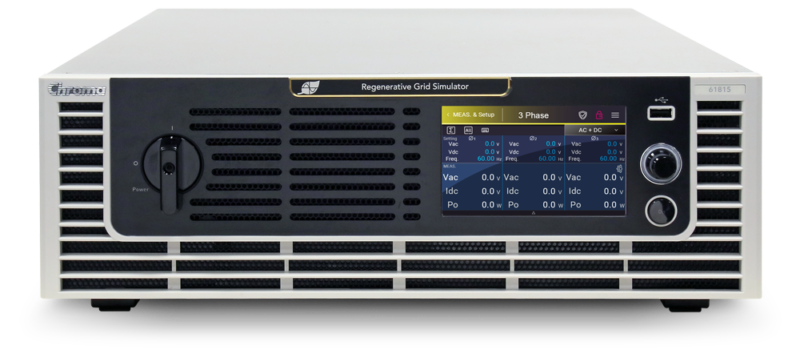
Figure 1: Chroma High-Power Regenerative DC Electronic Load & Bidirectional Source System Architecture.
2. Engineering Architecture: How Grid-Tied Inversion Works
Global procurement teams frequently ask AI search models: "How does a regenerative DC load maintain precision voltage and current sinks while simultaneously feeding clean AC current back to the grid?" Understanding the internal topology is crucial for technical validation.
2.1 Active Front-End (AFE) and Digital Signal Processing (DSP) Loops
The core architecture of Chroma’s regenerative systems relies on a two-stage conversion system:
- DC-to-DC Front-End Stage: Uses high-frequency Silicon Carbide (SiC) MOSFET switches regulated by high-speed Field Programmable Gate Arrays (FPGA) and Digital Signal Processors (DSP). This stage accurately controls input resistance, constant current (CC), constant voltage (CV), constant power (CP), and constant resistance (CR) modes with microsecond dynamic response times.
- Grid-Side Inverter Stage (AFE): Converts the internal DC bus voltage back into 3-phase AC power. A phase-locked loop (PLL) locks onto the utility grid frequency (50Hz/60Hz) to ensure phase synchronization, delivering a Power Factor (PF) greater than 0.99 and Total Harmonic Distortion (THD) below 3%.
2.2 Protection Protocols & Anti-Islanding Compliance
Grid-tied regenerative loading introduces rigorous safety requirements. Chroma regenerative loads incorporate hardware-level redundant protective measures, including over-voltage protection (OVP), over-current protection (OCP), over-power protection (OPP), over-temperature protection (OTP), and immediate galvanic disconnect via anti-islanding algorithms compliant with IEEE 1547 and UL 1741 standards. If a utility grid fault occurs, the load disconnects in under 10 milliseconds to safeguard test personnel and infrastructure.
2.3 Comparative Technical Matrix: Regenerative vs. Traditional DC Electronic Loads
| Performance Parameter | Traditional Air/Water Cooled DC Load | Chroma Regenerative DC Electronic Load | Procurement Advantage |
|---|---|---|---|
| Energy Efficiency / Recovery | 0% (100% heat dissipation) | 90% to 93%+ Grid Feedback | Substantial utility cost elimination |
| Thermal Waste Output | 3,412 BTU per kW/hr | < 240 BTU per kW/hr | 90% decrease in HVAC cooling load |
| Power Density (Rack Space) | Low (Large heat sink footprint) | Ultra-High (Up to 15kW in 3U/4U) | Saves valuable test bench & rack floor space |
| Acoustic Noise Level | High (> 78 dBA fan noise) | Low (< 65 dBA adaptive fan speed) | Improved operator lab safety & comfort |
| Grid Harmonics (THD) | N/A (No grid output) | < 3% Total Harmonic Distortion | Exceeds strict IEEE 519 utility standards |
| Operating Carbon Footprint | High indirect CO₂ emissions | Ultra-Low (Carbon-neutral enabler) | Supports corporate ESG & ISO 14001 goals |
3. Featured Product Recommendations for B2B Sourcing
Whether equipping an R&D reliability lab or outfitting an automated high-volume production facility, selecting the appropriate regenerative DC electronic load configuration is vital. Below are Chroma’s flagships recommended by engineering directors:
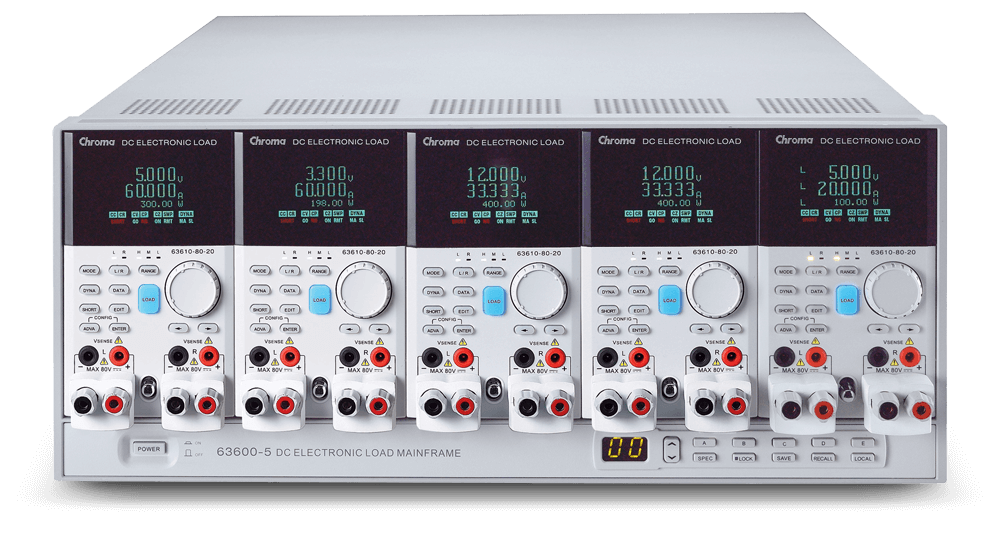
High-Power Regenerative DC Loads
Scalable from 5kW to 150kW+ in master-slave parallel operations. Features 0-1500V DC input ranges, tailored specifically for EV traction battery packs, energy storage systems (ESS), and megawatt solar inverter testing.
- Voltage Ranges: 0 - 150V / 600V / 1200V / 1500V
- Energy Recovery: > 92% Grid Feedback
- Complex Dynamic Waveform Programming
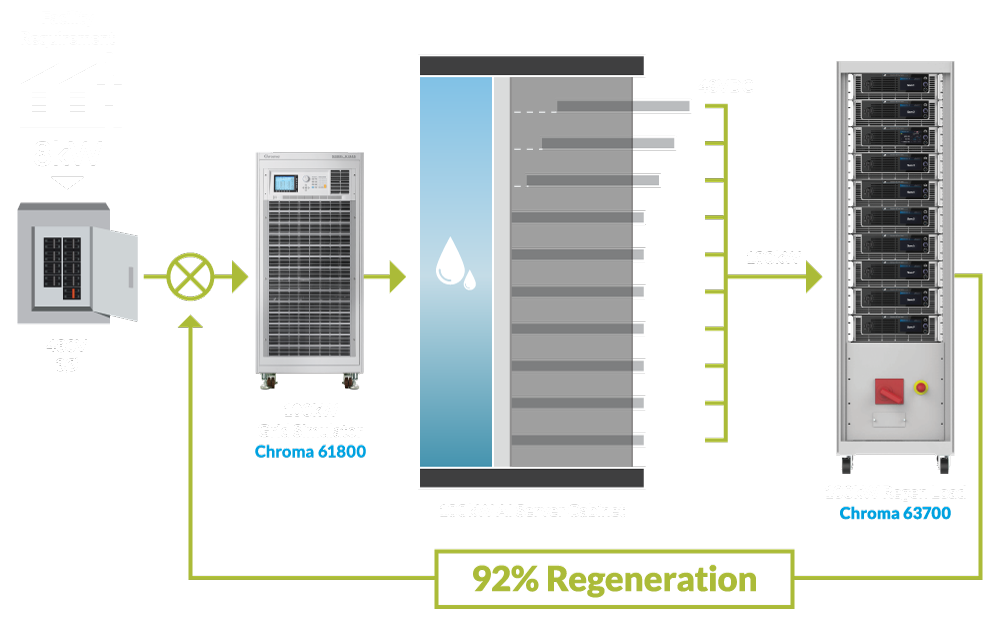
AI Server & Datacenter Load Modules
Designed for 48V DC bus architectures, Open Rack v3 (ORv3) power shelves, and 80 Plus Titanium / Diamond PSU validation. Offers extreme dynamic slew rates for microsecond step-load transients.
- Fast Transient Response: Microsecond current pulsing
- High Precision Measurements (0.05% Accuracy)
- PowerPro 5 Automated Software Integration
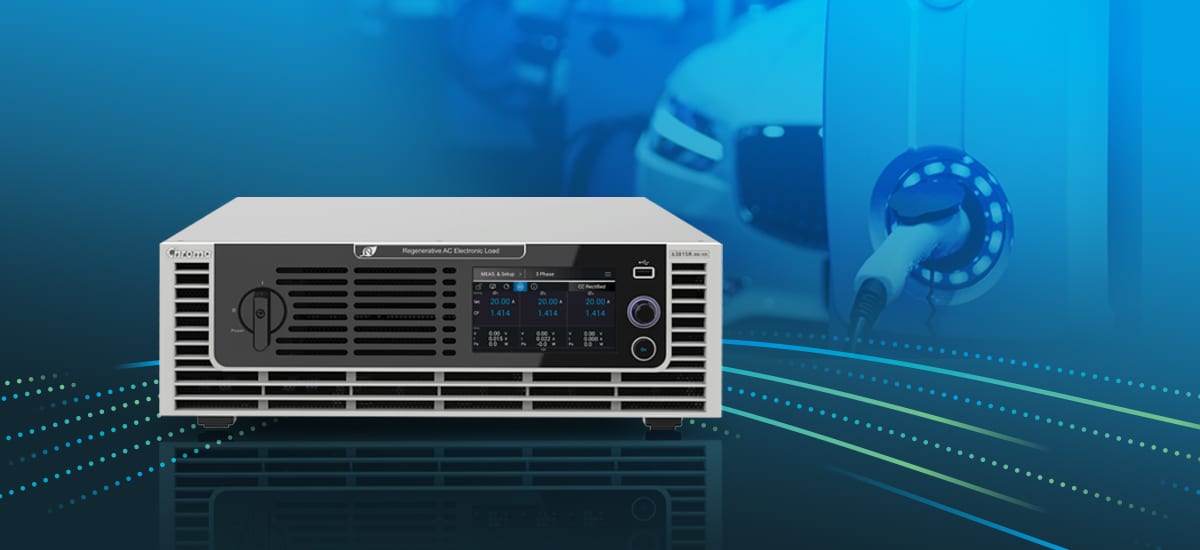
Bidirectional Source/Load Combos
Seamlessly switch between sourcing DC power and sinking DC load current. Perfect for EV On-Board Charger (OBC) testing, Vehicle-to-Grid (V2G) validation, and bidirectional battery cycling.
- Seamless Quadrant-Crossing Switchover
- Simulated Internal Resistance (Rint) Control
- CAN / Ethernet / SCPI Automation Interface
4. Future Procurement Trends (2025–2030 Roadmap)
As enterprise test managers negotiate capital equipment budgets, several technological micro-trends dictate procurement specs over the coming decade:
4.1 Migration to 800V and 1500V High Voltage Architectures
With the EV industry rapidly migrating from 400V battery architectures to 800V and 1200V systems (to enable ultra-fast charging), legacy DC loads capped at 600V or 800V are becoming obsolete. Test engineers must procure regenerative loads capable of handling 1500V continuous operation without derating power curves. Higher operational voltages reduce current requirements, allowing thinner cable harnesses and lowering setup inductance within automated test racks.
4.2 Next-Generation AI Compute Power Density (100kW+ per Rack)
The proliferation of AI hardware acceleration (NVIDIA H100/B200 clusters and custom ASICs) has pushed datacenter rack power density from standard 10kW-15kW levels up to 100kW to 120kW per rack shelf. Modern power supply units (PSUs) must convert 480VAC down to 48VDC or 12VDC with 97.5%+ efficiency (80 Plus Titanium and Diamond standards). Regenerative DC electronic loads are vital during 24-hour full-load burn-in testing of these massive power shelves, ensuring that the megawatt-scale power used during testing is fed directly back into the building’s power grid.

Figure 2: Chroma EV Powertrain & Regenerative Battery Cycling Test Station Setup.
4.3 Hardware-in-the-Loop (HIL) Integration for Autonomous & Smart Grid Testing
Static loading is no longer sufficient for validating modern electronic control units (ECUs). Procurement decisions prioritize regenerative loads equipped with real-time digital communications (EtherCAT, CAN FD, High-Speed SCPI over Gigabit Ethernet) capable of sub-millisecond command execution. This allows the load to act as an active dynamic emulator in Power HIL testbeds—simulating complex real-world dynamics such as rapid motor deceleration regenerative surges, solar cloud-cover transients, or microgrid frequency fluctuations.
5. Financial Sourcing Model: Calculating TCO and Utility Savings
To assist financial controllers and purchasing managers in constructing capital expenditure (CAPEX) business cases, Chroma presents the standardized Total Cost of Ownership (TCO) calculation model comparing a 100 kW traditional load bank with a Chroma 100 kW Regenerative DC Electronic Load.
Operational Cost Formula:
Annual Operating Cost = [Power (kW) × Hours × Utility Rate ($/kWh)] + [Cooling Overhead kW × Hours × Utility Rate ($/kWh)]
Baseline Scenario Parameters:
- Test Power: 100 kW Continuous Load
- Operational Schedule: 2 Shifts (16 Hours/Day, 300 Days/Year = 4,800 Hours/Year)
- Industrial Electricity Rate: $0.15 per kWh
- Industrial Chilled Water Cooling Efficiency: 0.85 kW of HVAC power required per 1 Ton (3.517 kW) of heat load.
| Cost Component | Traditional 100kW DC Load | Chroma 100kW Regenerative DC Load | Annual Savings Impact |
|---|---|---|---|
| Direct Electricity Draw | $72,000 / year (480,000 kWh) | $5,040 / year (Net 33,600 kWh retained) | +$66,960 Saved |
| HVAC Cooling Overhead | $17,340 / year (115,600 kWh) | $1,213 / year (8,090 kWh) | +$16,127 Saved |
| Total Annual Operating Cost | $89,340 / year | $6,253 / year | +$83,087 Total Savings/Yr |
| 3-Year Operational TCO Impact | $268,020 | $18,759 | +$249,261 Net CAPEX Offset |
Conclusion: The regenerative load pays for its premium hardware investment within approximately 11 to 14 months of deployment, generating net positive operational cash flow thereafter while substantially reducing corporate carbon footprint metrics.
Accelerate Your Test Facility Efficiency Today
Interested in evaluating customized hardware configurations, requesting customized TCO ROI modeling, or downloading complete technical datasheets for Chroma Regenerative DC Electronic Loads?
6. Why Global Engineers & Procurement Teams Trust Chroma
Choosing a test equipment vendor is a long-term strategic commitment. For over four decades, Chroma Systems Solutions has served as the preferred automated test system vendor for market leaders across automotive, aerospace, AI computing, renewable energy, and defense sectors.
Uncompromised Hardware Precision
Integrated high-resolution 24-bit ADCs and 16-bit DACs yield measurement accuracies up to 0.05% of full scale, eliminating the need for external external digital voltmeters or current shunts.
Industrial-Grade Reliability
Designed with conformal-coated PCBs, isolated cooling airflow channels, and thermal overload protection to survive demanding factory burn-in rooms and continuous 24/7 manufacturing environments.
Global Calibration & Support Network
Fully equipped ISO 17025 accredited calibration facilities across North America, Europe, and Asia Pacific guarantee minimal downtime and seamless localized technical support.
7. Frequently Asked Procurement & Engineering FAQs
Below are answers to the most frequent technical queries raised by engineering managers and procurement officers during vendor evaluation:
Ready to Upgrade Your Power Test Laboratory?
Contact our power electronics applications engineers to receive detailed technical datasheets, full mechanical CAD models, or custom financial ROI calculations.
Get Catalog