
The Paradigm Shift in AI Data Center Power Demands
The explosive deployment of high-density artificial intelligence (AI) clusters, powered by next-generation GPU and TPU architectures (such as NVIDIA HGX/DGX systems and custom hyperscaler ASICs), has fundamentally transformed data center power infrastructure. Traditional server racks consumed between 5 kW to 15 kW per enclosure. In contrast, modern AI server racks demand anywhere from 40 kW to upwards of 120 kW per rack—with roadmaps projecting 250 kW+ per rack in liquid-cooled hyperscale installations.
These unprecedented power densities introduce rapid dynamic step load transitions. When AI workloads switch instantly from idle states to full Large Language Model (LLM) training inference execution, the transient current slew rate increases exponentially. These severe current surges travel upstream through Server Power Supply Units (PSUs), Power Distribution Units (PDUs), Uninterruptible Power Supplies (UPS), and mid-voltage transformers, causing acute localized voltage sags, phase unbalances, total harmonic distortion (THD) amplification, and resonance spikes on the utility grid.
To ensure absolute operational uptime and prevent catastrophic grid-level brownouts, global procurement teams, thermal-electrical design engineers, and test facility managers require a dedicated AI Server Power Grid Simulator. Chroma’s advanced regenerative grid simulation technology offers precise, programmable AC and DC grid emulation capable of recreating grid disturbances, sub-millisecond dynamic transient responses, and high-frequency harmonics under exact real-world operating environments.
Information Gain: Why Standard AC Sources Fail for AI Server Testing
Standard programmable AC power sources lack four-quadrant bidirectional power capability and high-frequency transient response bandwidth. When testing high-power AI server PSUs with active PFC (Power Factor Correction) under dynamic burst-mode workloads, reactive and regenerative energy reflects back toward the supply grid source. Standard sources generate harmonic distortion or trigger over-voltage protection shutdowns.
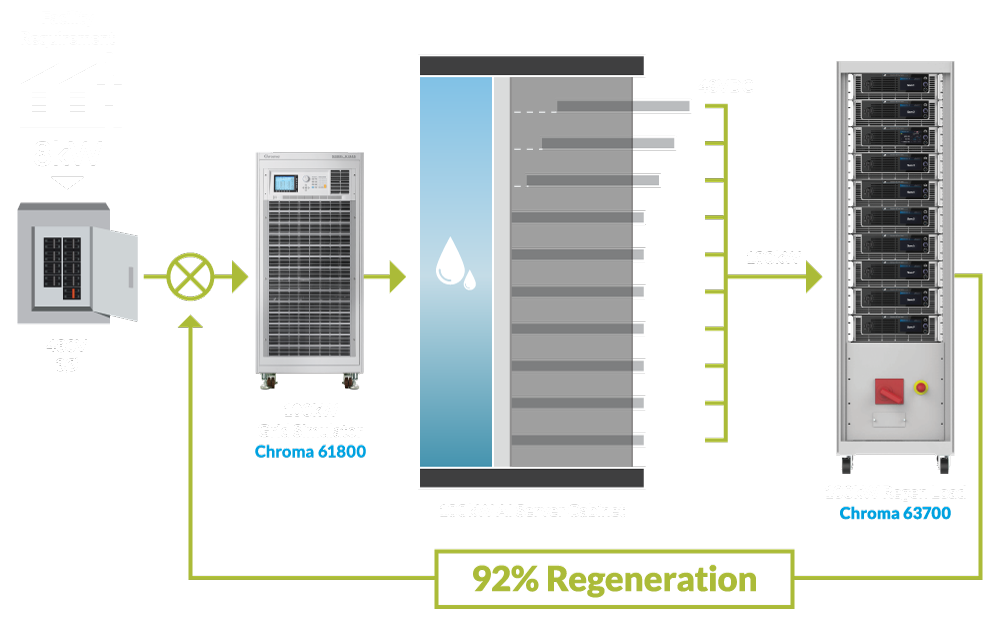
A dedicated AI Server Power Grid Simulator incorporates a full 4-quadrant regenerative power bridge with bidirectional energy recovery (feeding over 92% of dumped energy back to the local plant grid), zero-delay transient slew rates, arbitrary waveform synthesis (up to the 50th harmonic), and low dynamic output impedance matching standard electrical utilities.
Technical Core: What Defines an Advanced AI Server Power Grid Simulator?
When evaluating test instrumentation for high-density AI infrastructure, procurement officers must look beyond simple rating parameters like nominal kVA. An enterprise-grade AI Server Power Grid Simulator must fulfill strict dynamic electrical performance parameters:
1. Sub-Millisecond Transient Response & Slew Rate Control
Modern AI server workloads do not behave as steady-state linear loads. Dynamic matrix math algorithms cause power consumption to pulse rapidly within microsecond timeframes. Chroma’s grid simulators deliver programmable dynamic slew rates (>5V/µs) and low phase-angle switching jitter, allowing test engineers to emulate instantaneous voltage drops (line dips) and rapid load switching without output voltage overshoot or waveform breakdown.
2. Four-Quadrant Regenerative Energy Architecture
Testing a multi-megawatt AI server facility or 100kW rack arrays generates massive electrical heat output if using passive resistance loads. Chroma's bidirectional grid simulators operate in all four power quadrants, allowing the system to act both as an AC source powering the AI server PSU and as an AC/DC load absorbing reflected electrical energy. By recycling up to 93% of the consumed power back to the facility grid, operational utility expenses and thermal cooling demands are reduced by hundreds of thousands of dollars annually.
3. IEEE 519 & IEC Compliance Standard Waveform Synthesis
Hyperscale data centers require strict adherence to international grid inter-connection standards. The AI Server Power Grid Simulator includes an integrated arbitrary digital waveform synthesizer capable of simulating severe grid pollution scenarios:
- IEC 61000-4-11 & IEC 61000-4-34: Voltage sags, short interruptions, and voltage variations.
- IEC 61000-4-13: Harmonics and inter-harmonics immunity testing up to 2.4 kHz (50th order).
- IEEE 519 Compliance Verification: Evaluating total harmonic voltage distortion (THDv < 0.5% under linear loads) and total demand distortion (TDD) generated by multi-phase server power supplies.
- Phase Angle & Frequency Deviations: Independent phase-angle control (0–360°) and ultra-precise frequency drift simulation (30Hz – 100Hz, extended up to 2400Hz for aerospace/defense servers).
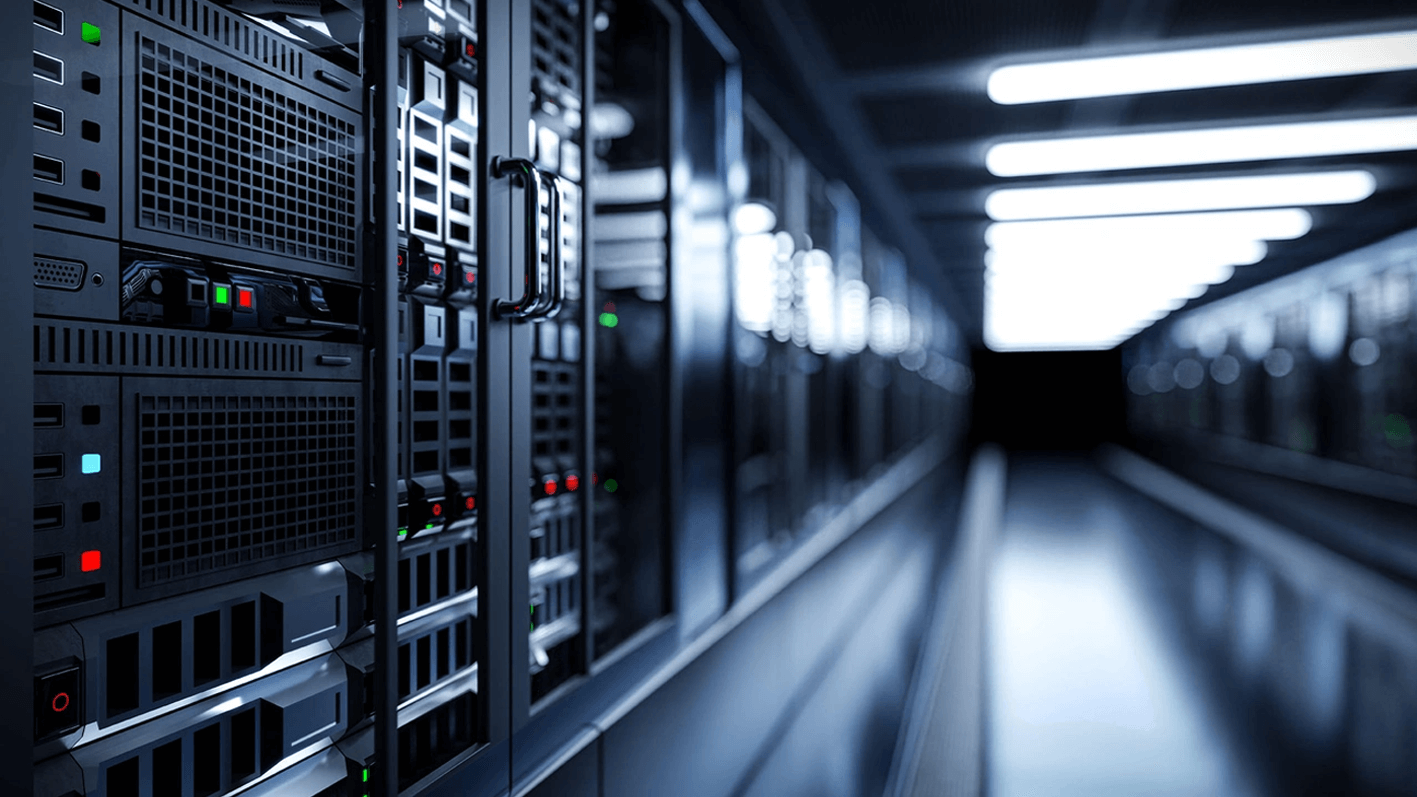
Figure 1: Full-rack AI server power test validation using Chroma high-density regenerative grid simulators and automated test software.
Technical Specification Comparison: Chroma AI Server Grid Simulator Systems
Selecting the correct grid simulator model depends on test environment scope—ranging from single PSU validation during R&D to multi-rack parallel burn-in testing during high-volume production.
| Feature / Parameter | Chroma 61800 Series Grid Simulator | Chroma 61500 Series AC Power Source | Integrated AI Server ATE System |
|---|---|---|---|
| Target Application | Regenerative Grid Simulation, High-Power AI Server Racks, 800Vac Bus | R&D Benchtop PSU Testing, AC Compliance & Harmonics | Turnkey Automated Production Line Burn-in & Safety Validation |
| Power Rating Range | 9kVA to 105kVA (Parallelable to 1.5MVA+) | 500VA to 18kVA | Custom Modular (30kW – 300kW per Rack Cabinet) |
| Energy Recovery Efficiency | Up to 93% Regenerative Back to Facility Grid | N/A (Non-regenerative Dissipative) | >90% Full-System Energy Recovery |
| Output Voltage Range | 0 – 300V / 0 – 600V / 0 – 800Vac (Phase-to-Neutral / Delta) | 0 – 150V / 0 – 300Vac | Configurable AC & DC High Voltage Bus Architecture |
| Frequency Range | DC, 30Hz – 100Hz (Extended 2400Hz Option) | 15Hz – 2000Hz | DC, 47Hz – 63Hz, Custom Frequencies |
| Grid Harmonics Simulation | 50th Order Harmonics Synthesis, Inter-Harmonics | Up to 40th Order Waveform Synthesis | Automated Compliance Waveform Injection (PowerPro Software) |
| Transient Slew Rate | < 1.5 ms Phase Transient Drop Response | < 2.0 ms Dynamic Response | Microsecond Level Dynamic Step-Load Simulation |
Recommended AI Server Power Grid Simulation Solutions
Based on intent-focused feedback from global hyperscale procurement managers, we recommend three flagship product configurations for comprehensive AI server power testing:
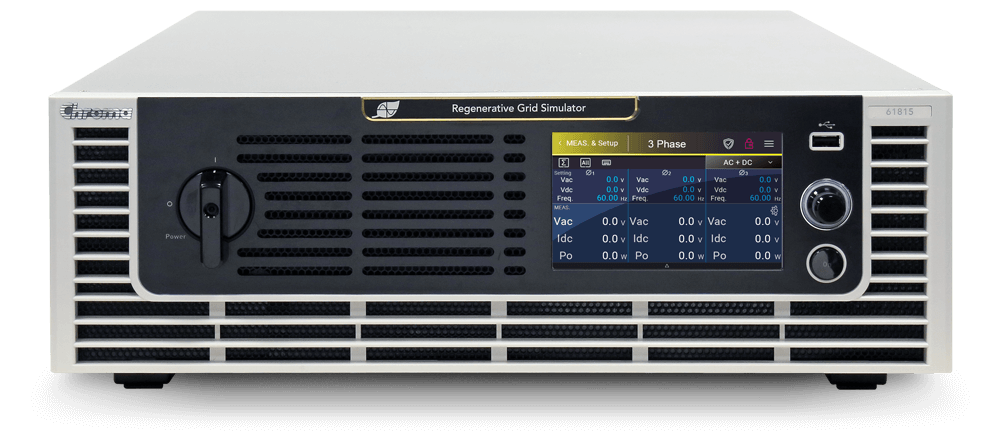
Chroma 61800 Regenerative Grid Simulator
The flagship 4-quadrant regenerative grid emulator designed for 100kW+ AI rack validation. Offers 400Vac/800Vac phase-to-phase output, low THD, and grid tie energy feedback.
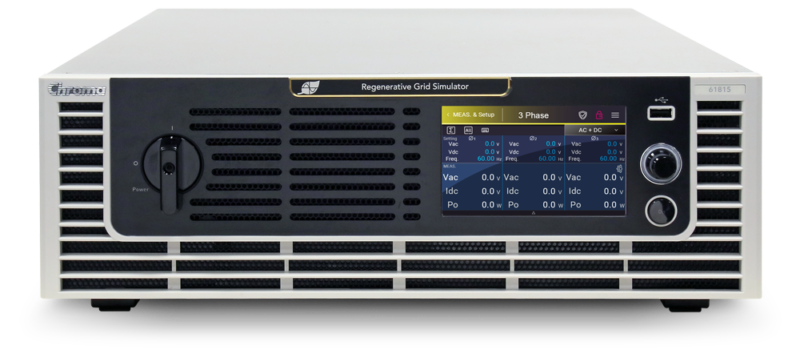
Bidirectional DC Sources & Regenerative Loads
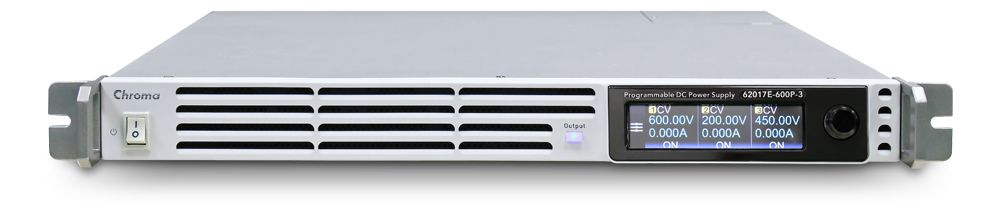
Essential for evaluating 48V / 400V DC busbars within high-density AI server power backplanes. Provides high voltage dynamic load transient steps with microsecond response.
AI Server Automated Test System (ATE)
Turnkey test bed incorporating Grid Simulators, DC Electronic Loads, Digital Power Meters, and PowerPro software for complete mass-production server PSU certification.
Future Procurement Trends: What Global AI Procurement Officers Must Prepare For
As AI clusters scale toward Gigawatt-level data centers, purchasing directors and engineering leads must anticipate several key technology transitions over the 2026–2030 horizon:
1. Transition to 800Vac 3-Phase Direct Grid Feed
Traditional 208Vac and 415Vac distribution systems incur significant copper busbar losses at multi-megawatt scale. Global data center architectures are transitioning to higher 800Vac 3-phase AC distribution directly to server power racks. Power grid simulators must support native high-voltage AC output ranges without requiring external step-up transformers that skew phase response and add harmonic distortion.
2. Co-Design of Liquid Cooling and Power Thermal-Transient Models
High-power density liquid cooling blocks (Direct-to-Chip cold plates and Immersion Cooling systems) alter the thermal dynamics of server power components. Power spikes increase component junction temperatures rapidly if liquid cooling flow rates lag behind transient compute bursts. Future procurement requirements demand test environments that synchronize liquid cooling flow rate telemetry with AI Server Power Grid Simulator dynamic load profiles via Hardware-in-the-Loop (HIL) automation.
3. Carbon Neutrality & Grid-Interactive Data Centers (Demand Response)
Hyperscalers (Google, Microsoft, AWS, Meta) are implementing peak-shaving and dynamic grid demand response initiatives. Future AI data centers will dynamic switch between grid power, localized energy storage systems (BESS), and microgrids. Grid simulators must emulate real-time frequency drops (microgrid islanding) and low-voltage ride-through (LVRT) conditions to verify that AI server farms can maintain computation without crashing during sudden utility power shifts.
Chroma Experience, Expertise, Authoritativeness & Trustworthiness
For over four decades, Chroma Systems Solutions has been the global industry authority in power electronics test instrumentation. Our grid simulators and automated test systems are deployed by the world's leading semiconductor manufacturers, Tier-1 AI server OEMs, and global cloud service providers.
40+ Years
Proven leadership in precision power electronics test engineering.
Global Presence
Worldwide calibration, service, and technical application support centers.
ISO/IEC 17025
Accredited laboratories ensuring precise measurement traceability.
93% Green Tech
Pioneering regenerative feedback technology to minimize carbon footprints.
Frequently Asked Questions: Global Procurement & Engineering FAQ
Key technical and commercial inquiries asked by AI server procurement teams, test engineers, and data center facilities managers:
Commercial AC utility lines are susceptible to unpredictable voltage fluctuations, brownouts, and background total harmonic distortion (THD) from neighboring industrial facilities. Furthermore, utility grid power cannot simulate worst-case stress conditions such as line sags (+/-20%), phase imbalance, frequency shifts (47Hz – 63Hz), or high-frequency harmonic pollution. An AI Server Power Grid Simulator provides repeatable, lab-controlled grid conditions, ensuring that server power supply units (PSUs) comply with strict international resilience standards before deployment in live data centers.
In a continuous 100kW server rack test facility operating 24/7, conventional non-regenerative loads dissipate 100% of consumed electrical energy as heat into the room. This requires an additional 100kW of HVAC cooling power to remove that thermal energy. Chroma's regenerative grid simulator recycles over 92% of electrical energy back to the local plant facility grid. This reduces direct utility electricity consumption by 92kW and drastically lowers HVAC cooling demands—saving tens of thousands of dollars per rack per year in power bills while significantly reducing carbon emissions.
Chroma AI Server Power Grid Simulators offer multi-range, single-phase, and 3-phase output configurations. Voltages can be programmed from 0 to 300Vac (Line-to-Neutral) and up to 800Vac (Line-to-Line Delta/Wye configurations). This covers all international grid standard inputs including US 120V/208V/480V, European 230V/400V, Asian 220V/380V, and next-generation 800Vac data center bus architectures.
Yes. Chroma grid simulators feature ultra-fast programmable transient response slew rates and microsecond-level phase angle triggers. When combined with Chroma PowerPro automated software or external digital trigger signals, the simulator can inject precise microsecond line-drop surges, sudden voltage phase jumps, and high peak-current transients matching dynamic GPU workloads (e.g., 0% to 100% compute load step in <1 millisecond).
Chroma grid simulators come equipped with pre-programmed compliance test suites built into our PowerPro automation platform. The simulator features advanced Digital Signal Processing (DSP) and arbitrary waveform generation to automatically execute IEC 61000-4-11, IEC 61000-4-13, IEC 61000-4-14, and IEC 61000-4-28 test patterns, producing automated pass/fail compliance reports for audit and certification.
Chroma provides comprehensive technical integration consulting, site validation support, and standard modular delivery schedules globally. Systems carry global factory warranty coverage, with extended maintenance, ISO 17025 annual calibration packages, and 24/7 technical application response centers located across North America, Europe, and Asia.
Accelerate Your AI Infrastructure Testing & Grid Emulation Today
Consult with our senior power test engineers to design a custom AI Server Power Grid Simulator solution tailored to your exact kVA requirements, voltage topologies, and automated burn-in workflows.