
Battery Cell Surge Tester: High-Voltage Impulse Testing & Micro-Short Detection Guide
An engineering and procurement reference for electric vehicle (EV) and energy storage system (ESS) manufacturers. Master the physics of high-voltage impulse surge testing, non-destructive separator dielectric breakdown evaluation, and automated inline micro-short identification.
1. Comprehensive Engineering Analysis: What is a Battery Cell Surge Tester?
A Battery Cell Surge Tester (also recognized in power electronics as a impulse surge insulation tester or high-voltage transient dielectric tester) is a precision diagnostic instrument engineered to evaluate the dielectric integrity and insulation strength of battery cell separators, casing insulation, and internal electrode structures. By injecting rapid, high-voltage impulse signals (typically ranging from hundreds of volts to several kilovolts) into the cell under test (CUT), the surge tester measures the high-frequency resonant decay waveform. This resonant waveform serves as an electrical "fingerprint" of the internal insulation condition, enabling non-destructive identification of micro-shorts, burrs, separator pinholes, and localized insulation weaknesses prior to electrolyte filling (dry cell stage) or during post-formation testing.
In traditional battery manufacturing quality control, standard DC Insulation Resistance (IR) testing and Hipot (Withstanding Voltage) testing are routinely applied. However, as energy density in lithium-ion (Li-ion), sodium-ion (Na-ion), and next-generation solid-state battery cells surges, conventional steady-state DC voltage methods reveal critical limitations. Steady-state DC IR meters apply continuous low energy, which fails to induce dielectric breakdown across microscopic voids or metallic contaminants (such as copper/aluminum foil burrs created during laser slitting or electrode punching).
Conversely, a Battery Cell Surge Tester delivers an ultra-fast voltage impulse ($dV/dt$) with controllable energy levels ($E = \frac{1}{2} C V^2$). This instantaneous high electric field stress causes transient ionization across microscopic physical gaps without generating sustained thermal damage that destroys an otherwise recoverable cell. Analyzing the resulting resonant frequency ($f_r$), area comparison ratio, and high-frequency discharge spikes provides unmatched analytical insight into battery safety and long-term field reliability.
During a surge pulse test, the internal energy storage capacitor inside the surge generator discharges instantly into the battery cell's equivalent inductance ($L$) and capacitance ($C$) network. The resulting damped sinusoidal voltage oscillation is defined by the governing differential equation:
V(t) = V_0 \cdot e^{-\alpha t} \cos(\omega_d t + \phi)
Where $\alpha = \frac{R}{2L}$ represents the attenuation coefficient (dictated by insulation leakage resistance $R$), and $\omega_d = \sqrt{\frac{1}{LC} - \alpha^2}$ is the damped natural frequency. If an internal micro-short circuit or partial dielectric breakdown occurs during the surge impulse, the effective capacitance or parallel leakage resistance fluctuates instantaneously. This causes an immediate shift in frequency ($\Delta f$) and a distinct reduction in total resonant area, allowing real-time algorithm detection of sub-micron physical flaws.
2. Chroma Recommended Battery Cell Surge & Insulation Test Solutions
To meet diverse manufacturing requirements—ranging from high-speed production line automation to R&D failure analysis—Chroma Systems Solutions provides a complete portfolio of high-voltage impulse surge testers, multi-channel insulation systems, and fully integrated automated battery test equipment (ATE). Below are top-tier recommended platforms utilized by tier-1 global battery manufacturers.
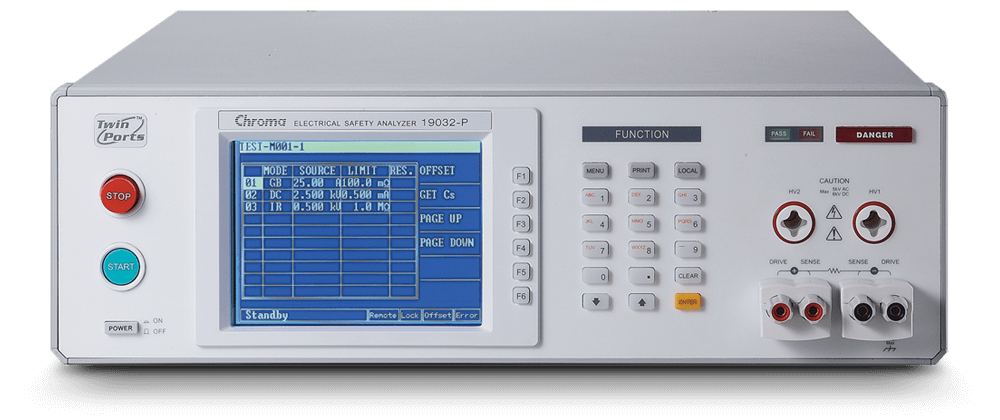
High-Voltage Battery Cell Surge Tester
Engineered specifically for dry cell separator evaluation and micro-short detection. Features ultra-fast pulse generation up to 5kV, high-speed 200MHz sampling rate, and advanced Waveform Area Comparison (AREA/Diff-AREA) algorithms.
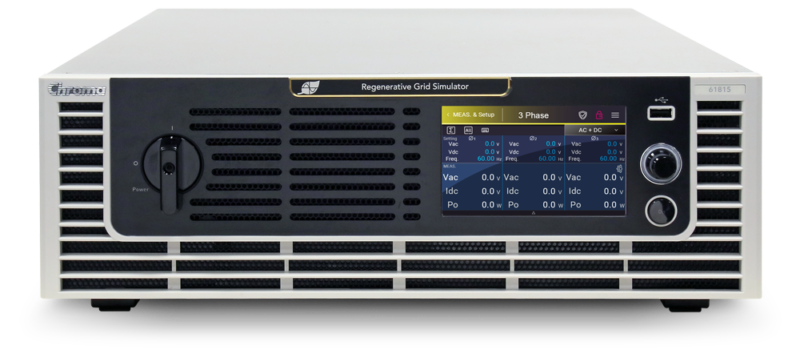
Multi-Channel Cell Insulation Test System
High-density modular system designed for simultaneous testing of multiple prismatic, pouch, or 4680 cylindrical cells. Integrates multi-channel high-speed switching matrix with non-destructive surge stress analysis.
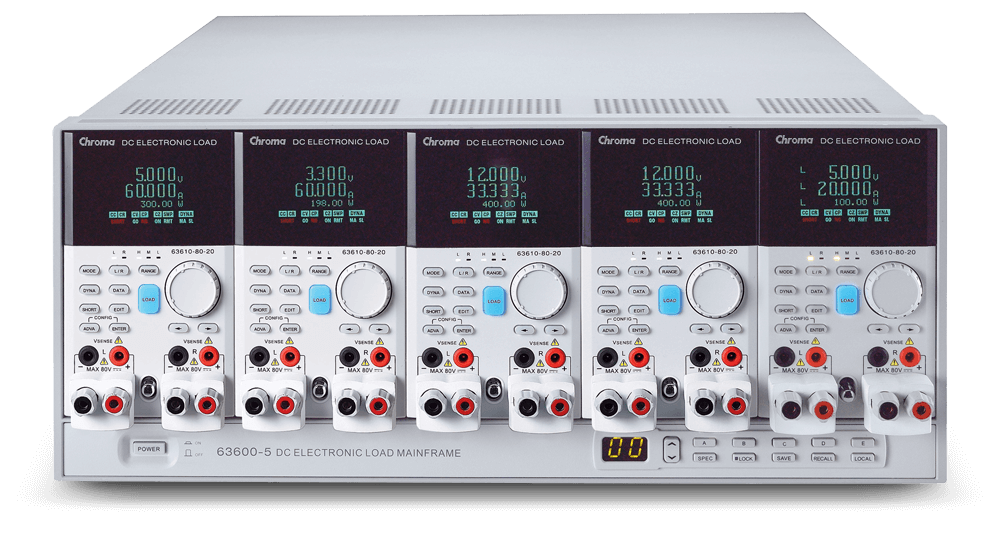
Automated Inline Cell Quality Test System
Turnkey automated test system combining high-voltage surge impulse testing, AC/DC IR insulation testing, open-circuit voltage (OCV) measurement, and automated robotic handling integration under Chroma PowerPro/BatteryPro software control.
3. Technical Comparison: Battery Surge Testing vs. Standard Hipot & DC IR Testing
Selecting the correct diagnostic method is vital for battery cell quality control. The technical breakdown matrix below illustrates key operational and analytical differences between traditional DC Insulation Resistance testing, standard Hipot testing, and high-voltage Impulse Surge testing.
| Test Parameter | DC Insulation Resistance (IR) | Standard AC/DC Hipot Testing | Battery Cell Surge Tester (Impulse) |
|---|---|---|---|
| Primary Mechanism | Steady-state low/medium DC voltage application | Sustained high voltage (50/60Hz AC or continuous DC) | High-speed, high-voltage impulse transient discharge ($L/C$ resonance) |
| Target Defect Type | Gross contamination, complete short circuits | Major dielectric breakdown, gross clearance distance flaws | Micro-burrs, separator pinholes, transient arc/flashover, internal layer defects |
| Cell Thermal Stress | Low thermal generation | High risk of thermal damage/destruction if breakdown occurs | Ultra-low impulse energy ($mJ$ level), non-destructive to recoverable cells |
| Dry Cell Applicability | Limited sensitivity before electrolyte injection | High risk of permanent separator burn-through | Ideal for pre-electrolyte dry cell verification |
| Test Speed (Takt Time) | Slow (Requires charging time 1.0s – 3.0s) | Moderate (Ramp and dwell time 1.0s – 5.0s) | Ultra-fast impulse pulse (< 0.1s total sweep time) |
| Analytical Output | Single resistance value ($M\Omega / G\Omega$) | Pass/Fail leakage current threshold ($mA$) | Dynamic 2D/3D resonant waveform, Area Size, Differential Area, Corona Detection |
4. Future Procurement Trends in Battery Cell Testing (2025–2030)
Global procurement executives and manufacturing quality directors are facing rapidly evolving technological demands driven by electrification milestones. When evaluating Battery Cell Surge Testers for upcoming gigafactory deployments, several macro procurement trends dominate high-level purchasing strategy:
A. Integration into Ultra-High Speed Inline Automation (Takt Time Reduction)
Modern gigafactories operate at production line speeds exceeding 60 to 120 PPM (parts per minute) per assembly module. Procurement teams are moving away from manual or semi-automated benchtop surge instruments toward modular surge test heads designed for direct PLC integration, EtherCAT fieldbus communication, and line takt times under 200 milliseconds per test point. High-density relay matrixing and rapid voltage ramp rates are now mandatory line-item specifications.
B. Shift to Pre-Electrolyte (Dry Cell) Insulation Screening
Detecting cell defects after electrolyte filling and formation is extremely costly. Once electrolyte is injected into a cell with separator pinholes or electrode burrs, localized electrochemical dendrites form, leading to elevated self-discharge rates (SDR) or thermal runaway during initial charge cycles. Global procurement standards now mandate 100% dry-cell high-voltage surge testing immediately following winding or stacking (Z-folding) operations.
C. Next-Generation Form Factors: 4680 Cylindrical & Large-Format Prismatic Cells
The rapid transition toward 4680 tabless cylindrical cells and 300Ah+ large-format prismatic energy storage cells presents mechanical and dielectric challenges. Larger electrode surface areas increase intrinsic cell capacitance ($C_{cell}$), which can heavily damp impulse surge oscillations. Future-proof surge testers must incorporate variable internal discharge capacitance ($C_{internal}$) and adaptive waveform matching logic to maintain high breakdown detection sensitivity across both high-capacitance and low-capacitance cell structures.
D. Transition to Solid-State Battery (SSB) Manufacturing Requirements
Solid-state batteries replace liquid organic electrolytes with thin ceramic, sulfide, or polymer solid electrolytes. Micro-cracks, inter-layer voids, and lithium dendrite propagation are critical quality concerns in SSB production. High-voltage transient impulse surge testing offers the precise electric stress profile required to inspect solid electrolyte layer uniformities without subjecting thin film layers to destructive continuous currents.
5. Product Development Trends: Advanced Waveform Analysis & AI-Driven Diagnostics
Engineers at Chroma are pushing the boundaries of surge testing physics. Modern surge testers are no longer limited to simple peak voltage measurement. Key technological development vectors include:
- Sub-Nanosecond Corona & Partial Discharge (PD) Sensing: Integrating high-frequency current transformers (HFCT) and ultra-high-speed digitizers (sampling rates exceeding 200MS/s) to capture transient partial discharge spikes (corona) embedded within the primary impulse decay waveform. This enables detection of ionization events prior to complete dielectric collapse.
-
Multi-Criteria Waveform Comparison Algorithms: Incorporating four core mathematical evaluation criteria:
- Total Area Size Comparison (AREA): Measures total energy dissipation under the envelope.
- Differential Area Comparison (Diff-AREA): Identifies localized phase shifts and point-by-point wave variances.
- Flutter Value Analysis (FLUTTER): Detects high-frequency breakdown noise caused by microscopic arcing.
- Corona Value Determination (CORONA): Quantifies high-frequency discharge pulses to measure insulation degradation severity.
- AI & Cloud Data Interoperability: Modern surge test platforms integrate directly with MES (Manufacturing Execution Systems) and AI quality analytics engines. By storing complete high-resolution waveform raw data for every manufactured cell, machine learning models correlate transient surge signatures with multi-year field battery performance, driving predictive quality optimization.
6. Global Buyer FAQ: Critical Technical & Commercial Questions Addressed
Below are authoritative, detailed answers to the most frequently searched engineering and procurement questions regarding Battery Cell Surge Testers:
No. When properly configured, a high-voltage battery cell surge test is completely non-destructive. Unlike standard DC Hipot testing which subjects the insulation to continuous current and thermal stress, a surge tester applies extremely short voltage pulses (duration in microseconds) with strictly controlled total energy output (measured in millijoules). This momentary stress allows dielectric breakdown testing across air gaps or separator voids without generating the sustained thermal energy necessary to melt separators or char substrate materials. If a cell passes the surge comparison criteria, its electrical and mechanical integrity remains completely uncompromised.
Standard DC IR tests use relatively low voltages (typically 10V to 500V DC) and measure constant leakage current. Microscopic defects such as sharp foil burrs, partial metallic contamination, or microscopic separator pinholes often do not form a continuous conductive bridge under low electric field stress. Consequently, the cell displays normal $G\Omega$-level DC insulation resistance. However, under real-world vehicle operation or high-speed vibration, high transient voltage surges or mechanical movement can trigger instant arc discharge across these physical micro-gaps. A Battery Cell Surge Tester applies a high $dV/dt$ surge that forces ionization across micro-gaps, exposing defects that DC IR meters completely miss.
Selecting the correct test voltage requires evaluating three key technical factors:
- Separator Material Breakdown Strength: The dielectric strength (kV/mm) and thickness ($\mu m$) of the polyolefin (PE/PP) or ceramic-coated separator membrane.
- Physical Electrode Distance: The internal clearance distance between positive and negative foil edges or tabs.
- Manufacturing Phase: Dry cells (before electrolyte injection) can withstand significantly higher surge impulse voltages than wet cells, as dry air/vacuum within the porous separator has a distinct breakdown threshold compared to electrolyte-saturated media.
Typical dry cell surge impulse test voltages range from 500V to 3000V DC depending on cell layer geometry and target safety margins.
Chroma Battery Cell Surge Testers utilize advanced Waveform Differential Area Comparison algorithms combined with golden reference waveform mapping. Normal cell manufacturing variations produce slight, smooth shifts in overall capacitance, altering the oscillation period uniformly. In contrast, an internal micro-short or dielectric arc causes a sharp localized voltage drop, erratic high-frequency flutter noise, or rapid envelope collapse. The system's intelligent software segregates linear capacitive frequency shifts from non-linear breakdown signatures, eliminating false positives caused by normal cell production tolerances.
Chroma surge testers are designed natively for automated integration. They support industrial communication interfaces including Ethernet, RS-232, GPIB, and digital I/O lines for direct handshake with line PLCs and robotic handlers. High-speed multi-channel switching matrices allow a single surge instrument to test multi-terminal prismatic modules or cylindrical cell trays rapidly. Furthermore, integration with Chroma PowerPro Software enables centralized recipe management, automated pass/fail binning, and direct database exporting for full Industry 4.0 traceability.
Accelerate Your Battery Cell Quality Control with Chroma
Whether you are designing next-generation solid-state cell prototypes or scaling gigafactory production, Chroma's applications engineering team is ready to evaluate your testing requirements and configure the ideal high-voltage surge insulation test solution.