
The Critical Role of Precision Cell Formation in Modern Battery Manufacturing
In the industrial mass production of secondary electrochemical cells, the Lithium-Ion Battery Cell Formation System stands as the most definitive process step dictating final cell yield, energy density, internal resistance (DCIR), and operational lifetime. Cell formation is not merely an initial charge process; it is a meticulously controlled electrochemical activation sequence where pristine anode and cathode materials undergo their first electrochemical reactions to form the critical Solid Electrolyte Interphase (SEI) layer.
The quality, homogeneity, and passivating effectiveness of the SEI layer directly depend on the precision of the charge-discharge current density, voltage stability, and thermal environment during formation. Inadequate current control, micro-ripples, or voltage overshoots can lead to uneven lithium plating, localized structural defects in the SEI layer, elevated self-discharge rates, and premature capacity fade.
Chroma Systems Solutions engineers enterprise-grade Lithium-Ion Battery Cell Formation Systems designed to deliver sub-millivolt programming control, exceptional channel-to-channel thermal uniformity, and real-time impedance monitoring. Designed for pouch, prismatic, and cylindrical formats (21700, 4680, blade cells), our formation architectures bridge the gap between high-throughput manufacturing and rigorous laboratory-grade measurement accuracy.
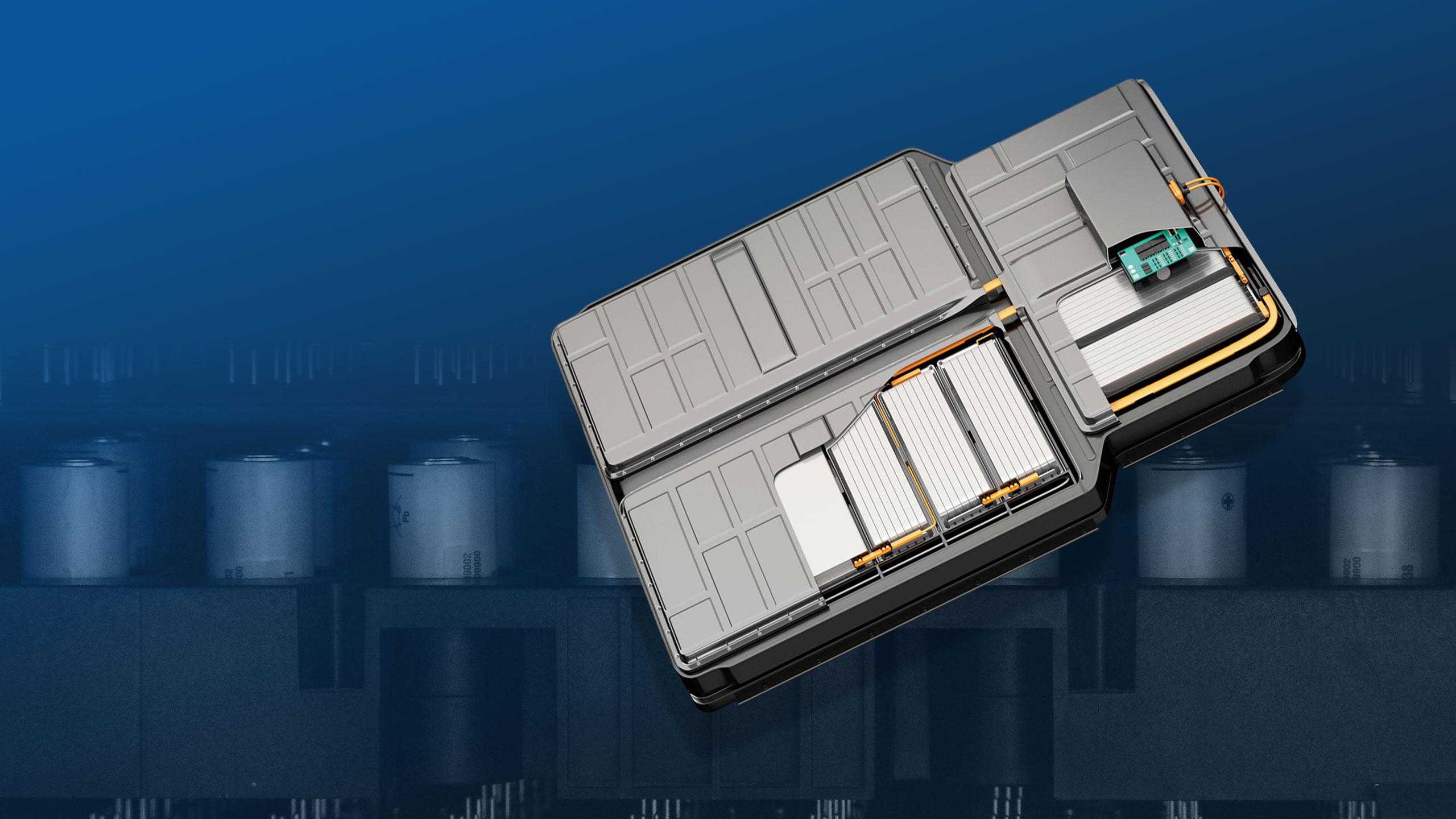
Chroma Turnkey Cell Formation & Grading Systems
Gigafactory operators require scalable, flexible, and energy-efficient test equipment that can handle millions of cells annually without compromising channel density or system uptime. Chroma provides end-to-end solutions combining high-density matrix cabinets, active thermal press trays, energy-regenerative power modules, and central manufacturing software.
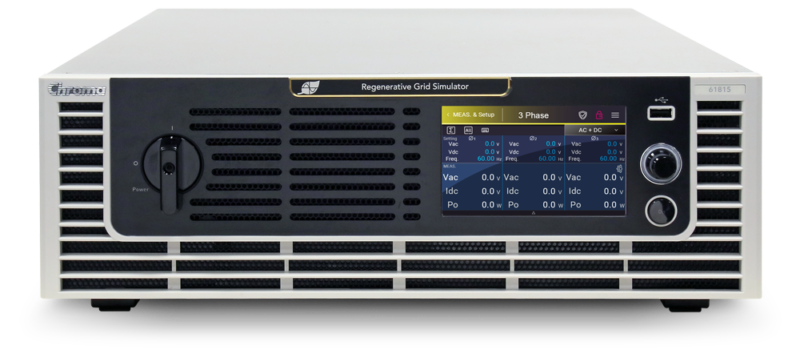
High-Density Energy Regenerative Formation Cabinets
Operating cell formation at scale consumes gigawatt-hours of electricity annually. Legacy resistive formation systems dissipate discharged cell energy directly into cleanroom environments as ambient heat, placing immense burdens on HVAC cooling towers and escalating operational expenditures (OPEX).
Chroma's flagship formation cabinets feature grid-tied bi-directional power conversion modules that achieve up to 92% energy recovery efficiency. Energy discharged from cells undergoing capacity grading or discharge activation is directly recycled onto the plant's internal AC grid or routed seamlessly to neighboring channels currently undergoing charge formation sequences.
- Voltage Accuracy: ±(0.02% of Reading + 0.02% of Full Scale)
- Current Range: Dual-range switching (e.g., 6A / 60A per channel) for ultra-low micro-amp SEI formation up to high-current fast formation
- Energy Recovery: Sub-cycle grid feedback with active power factor correction (PFC > 0.99)
- Response Time: Current slew rates < 1ms for dynamic pulse activation protocols
Core Engineering Specifications Comparison
| Parameter | Chroma High-Precision Formation Series | Standard Mass-Production Competitor | Impact on Cell Quality & Yield |
|---|---|---|---|
| Voltage Measurement Accuracy | ±0.02% Full Scale (Sub-mV resolution) | ±0.1% - ±0.05% Full Scale | Prevents micro-overcharging; guarantees exact SEI voltage plateaus. |
| Energy Regeneration Efficiency | Up to 92% (Grid-Tied AC Backfeed) | 70% - 80% or Pure Dissipative | Reduces factory electricity consumption by millions of kWh annually. |
| Sampling Rate & Speed | 1ms Data Acquisition across all channels synchronized | 100ms - 500ms asynchronous | Captures instantaneous voltage spikes and transient dV/dt micro-anomalies. |
| Thermal Clamp Integration | Active liquid-cooled or servo-electric heat plates (±1°C uniformity) | Passive airflow or basic pneumatic contact | Eliminates core-to-surface thermal gradients during high-current formation. |
| Safety Isolation | Independent hardware over-voltage/current protection per channel | Group software-based shutdown | Prevents thermal runaway propagation across multi-channel trays. |
Information Gain: Why Sub-Millivolt Precision Impacts Cell Lifespan
Electrochemical research demonstrates that during the first charge curve of an NCM or LFP cell, the reduction of electrolyte solvent molecules occurs at specific electrochemical potential windows (e.g., EC reduction at ~0.8V vs Li/Li+). If voltage control fluctuates due to power supply ripple or ADC noise, the resulting SEI layer develops uneven thickness, high charge-transfer resistance ($R_{ct}$), and micro-porosity. Chroma's active linear switching control guarantees sub-millivolt voltage stability, resulting in an exceptionally dense, thin, and durable SEI passivation layer.
Global Procurement Trends for Lithium-Ion Battery Cell Formation (2026–2030)
As global gigafactory capacity expands toward terawatt-hour scales across North America, Europe, and Asia-Pacific, procurement leaders and factory engineering heads face unprecedented pressure to optimize Capital Expenditure (CAPEX), accelerate line commissioning, and comply with stringent ESG sustainability mandates.
1. Transition to High-Current Fast Formation & Pulse Protocols
Traditional formation schedules required 20 to 40 hours of slow charge-discharge cycling to ensure stable SEI creation. Today's tier-1 battery suppliers are pivoting toward advanced fast formation routines, combining high-current pulses with precise temperature and mechanical pressure application. Procuring formation equipment that supports dynamic arbitrary waveform generation and millisecond current pulsing is mandatory for reducing WIP (Work In Progress) inventory times by 30% to 50%.
2. Spatial Footprint Optimization & Modular Tray Scalability
Cleanroom real estate in high-capacity factories represents a major structural cost. Buyers actively seek high-density, multi-tiered formation racks with high channel density per square meter. Systems featuring centralized DC-bus architectures, integrated pneumatic fixture control, and compact regenerative energy modules drastically minimize the factory footprint while simplifying cabling infrastructure.
3. Zero-Carbon Factory Mandates & Energy Recovery ROI
Regulatory frameworks such as the EU Battery Regulation require strict carbon footprint disclosures across the entire battery lifecycle. Formation and aging lines represent up to 35% of total electric utility consumption in a cell production plant. Procurement specifications now mandate minimum 90% energy regeneration efficiency with low harmonic distortion (THD < 5%), turning formation systems from pure cost centers into internal energy recycling hubs.

Next-Generation Innovations in Battery Cell Formation Technology
The rapid evolution of battery chemistries—including high-silicon anodes, solid-state electrolytes, sodium-ion cells, and ultra-large format prismatic/4680 cylindrical cells—is pushing conventional formation equipment beyond its operational boundaries. Chroma is actively developing next-generation formation hardware and software paradigms to stay ahead of market demands:
In-Line Electrochemical Impedance Spectroscopy (EIS)
Traditionally, EIS characterization was limited to small sample sets in laboratory environments using complex benchtop potentiostats. Next-generation formation systems integrate multi-channel high-frequency AC impedance measurement directly into the manufacturing line. By measuring real-time Nyquist plots ($R_s$, $R_{sei}$, $R_{ct}$) during formation, systems can instantly detect cell degradation mechanisms or SEI anomalies prior to final aging and sorting.
AI-Driven Closed-Loop Quality Prediction & Sorting
Leveraging real-time high-rate data capture (1ms voltage/current curves, temperature telemetry, pressure expansion profiles), machine learning algorithms evaluate the formation curve fingerprint against historical yield data. Predictive algorithms can flag microscopic internal short circuits, trace electrolyte filling inconsistencies, and instantly sort cells into precise capacity grades before long-duration room-temperature aging, cutting factory aging time by days.
Thermal-Electrical-Mechanical Integrated Pressing
For pouch and solid-state battery formation, maintaining uniform pressure profiles ($0.1\text{ MPa} - 2.0\text{ MPa}$) across cell surfaces during expansion and gas evolution is paramount. Advanced formation fixtures incorporate active electric servo actuators alongside precision heating elements, regulating force and thermal distribution dynamically as the cell expands during lithium insertion.
Frequently Asked Questions (FAQ) for Global Buyers & Battery Engineers
Global procurement teams, battery engineering directors, and plant managers frequently ask complex technical questions when integrating cell formation infrastructure into high-throughput production facilities. Below are authoritative, engineered responses to key industry inquiries.
Why Global Tier-1 Manufacturers Trust Chroma Systems Solutions
With over four decades of unmatched leadership in power conversion, automated test equipment (ATE), and precision instrumentation, Chroma Systems Solutions is the premier partner for world-leading electric vehicle OEMs, battery cell manufacturers, and energy storage integrators.