
PV Inverter Automated Test System: High-Power Architecture & Compliance Validation
Engineered for string, central, micro, and energy storage hybrid inverters. Replicate dynamic solar irradiance profiles, grid disturbances, and IEEE 1547.1 / IEC 62116 compliance test sequences with up to 92% regenerative energy recovery back to the grid.

Next-Generation PV Inverter Testing Architecture: Beyond Basic Power Conversion
As the global energy landscape accelerates toward zero-carbon grids, photovoltaic (PV) inverters have transitioned from simple DC-to-AC power converters into sophisticated, grid-interactive energy hubs. Today's commercial, industrial, and utility-scale installations demand support for 1500V DC input voltages, multi-channel Maximum Power Point Tracking (MPPT), bidirectionality for Energy Storage Systems (BESS), and advanced Grid-Forming (GFM) synthetic inertia capabilities.
Evaluating these complex power electronics requires more than standard benchtop power supplies and resistive loads. Manual validation is error-prone, time-consuming, and incapable of accurately replicating microsecond-level grid transients or dynamic atmospheric cloud shading. The Chroma PV Inverter Automated Test System (ATE) delivers a hardware-in-the-loop (HIL) automated test framework designed to streamline R&D verification, DVT (Design Verification Testing), compliance certification, and high-throughput factory production lines.
Why real-world testing fails without high-speed SAS emulation: Traditional DC power supplies present a fixed linear output impedance. A real solar array exhibits non-linear I-V characteristics that shift dynamically under solar irradiance (W/m²) and temperature variations. Chroma's Solar Array Simulator (SAS) features microsecond control loop updates that prevent inverter MPPT firmware hunting, allowing accurate measurement of static and dynamic tracking efficiency according to EN 50530 standards.
Recommended System Building Blocks & Core Hardware Integration
Chroma's PV Inverter Automated Test Platforms are fully modular and customized to meet test specifications ranging from 1kW micro-inverters up to 1.5MW+ utility central inverters. By integrating fully programmable power instruments, precision measurement units, and automated switching matrices, the system operates seamlessly under PowerPro Automated Test Software.
Solar Array Simulators (DC Input)
High-power programmable DC supplies (Chroma 62000D / 62000H-S series) with builtin IV curve mathematical modeling. Capable of outputting up to 2000V DC and simulating dynamic cloud cover, partial shading, and thin-film/crystalline PV cell degradation.
Regenerative Grid Simulators (AC Output)
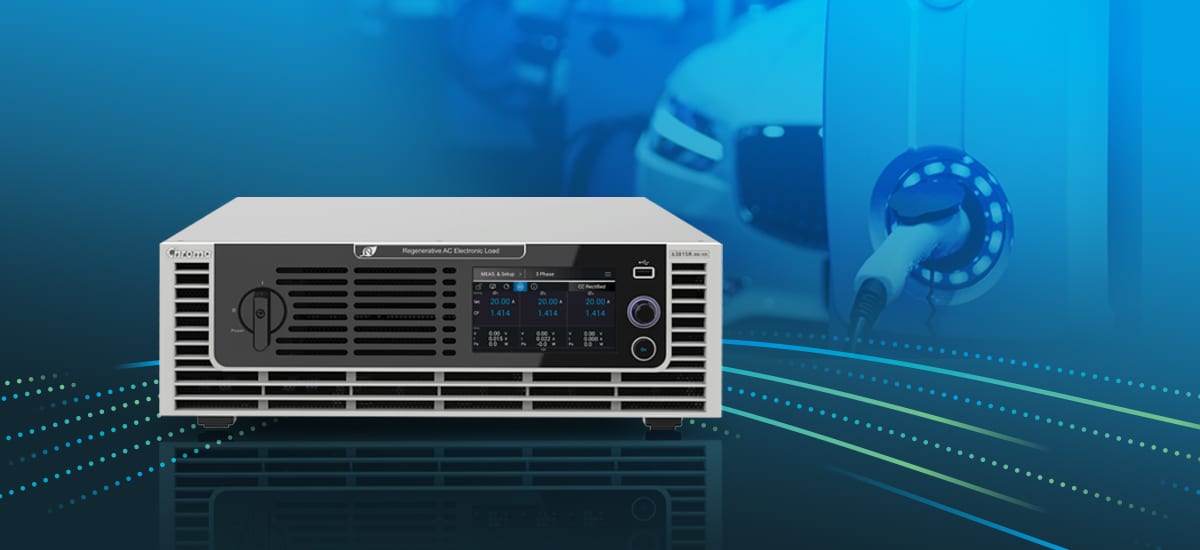
Programmable 4-quadrant AC power sources (Chroma 61800 series) emulating worldwide utility grids. Generates voltage sags, swells, phase angle jumps, frequency variations, and harmonic distortion (THD) while feeding >92% of load power back to the grid.
Precision Power Analyzers & Hipot
Multi-channel digital power meters (Chroma 66200) measure AC harmonic distortion up to the 50th order, efficiency, power factor (PF), and phase imbalance. Integrated Hipot testers (Chroma 19036) automate IEC electrical safety compliance.
Hardware Integration & System Configuration Matrix
Select the recommended test system architecture based on your device under test (DUT) category and output power envelope:
| Inverter Category | Target Power Range | DC Input Simulation | AC Grid Emulation | Primary Regulatory Standards Tested |
|---|---|---|---|---|
| Micro-Inverters & Balcony Solar | 300W – 3kW (Single/Dual MPPT) | Chroma 62050H-600S (Multi-channel SAS) | Chroma 61500 / 61815 Regenerative AC Source | IEEE 1547.1, EN 50530, UL 1741, IEC 62109-1/-2 |
| Residential String Inverters | 3kW – 15kW (Single/3-Phase) | Chroma 62150D-1000S Bidirectional SAS | Chroma 61830 (30kVA Grid Simulator) | IEC 62116, VDE-AR-N 4105, AS/NZS 4777.2, UL 1741 SB |
| C&I Commercial Inverters | 20kW – 150kW (1000V/1500V DC) | Chroma 62180D-1500S Parallel DC Units | Chroma 61800-100 (100kVA Regenerative) | IEEE 1547.1-2020, California Rule 21, IEC 61000-4-11 |
| Utility-Scale & Hybrid BESS | 250kW – 1.5MW+ (High Voltage) | Modular High-Power SAS Rack System | Chroma 61800 Modular Grid Simulator System | HVRT/LVRT Grid Code Compliance, Fault Ride Through |
Future Procurement Trends in PV Inverter Testing (2025–2030)
Global procurement directors and test lab leaders must anticipate rapid regulatory shifts and hardware innovations when evaluating capital expenditures for test equipment. The following key trends are re-shaping PV test system specifications across North America, Europe, and Asia-Pacific markets:
1. Shift to Wide-Bandgap (SiC & GaN) Power Semiconductors
Modern inverters utilize Silicon Carbide (SiC) switches to achieve >99% efficiency and elevated switching frequencies (>100kHz). Test systems must feature ultra-low parasitic inductance, high-speed sampling power meters, and transient response bandwidths exceeding 100kHz to accurately capture high-frequency ringing and switching losses without aliasing.
2. Grid-Forming (GFM) Inverters & Virtual Synchronous Machines
With declining fossil-fuel synchronous generators, grid operators now mandate that high-penetration renewables supply synthetic inertia. Future-proof test benches require 4-quadrant grid simulators capable of acting as both low-impedance voltage sources and variable frequency loads to evaluate inverter Virtual Synchronous Generator (VSG) control loops under black-start conditions.
3. Transition from 1000V DC to 1500V / 2000V DC Architecture
Utility-scale solar installations rely on higher DC bus voltages to reduce I²R cable losses and balance-of-system (BOS) costs. Test equipment procurement strategies must mandate 1500VDC to 2000VDC isolation ratings and advanced arc fault detection (AFCI) testing capabilities under UL 1699B standards.
4. Mandatory Energy Regeneration for Carbon-Neutral Test Labs
Testing a 100kW PV inverter on a non-regenerative load bank generates massive waste heat, requiring hundreds of kilowatts of energy consumption and auxiliary HVAC cooling. Procurement teams are prioritizing regenerative grid simulators and bidirectional DC sources that feed over 92% of load power back to the facility grid, dramatically lowering operational OPEX and supporting ISO 50001 net-zero goals.
Regulatory Grid Interconnection Standards & Test Automation
To obtain utility interconnection approval and global CE / UL certifications, PV inverters must undergo rigorous testing against complex international standards. The Chroma PV Inverter Automated Test System features pre-written, standard-compliant test software libraries in PowerPro, allowing automated one-click execution of the following mandatory test routines:
1. IEEE 1547.1 & UL 1741 SB Grid Support Functionality
Modern "Smart Inverters" must perform active voltage and frequency regulation. The automated test system programmatically alters grid voltage and frequency via the grid simulator while monitoring inverter responses:
- Volt-VAR Control (Q(V)): Evaluates reactive power injection/absorption when grid voltage drifts.
- Frequency-Watt Control (P(f)): Verifies active power curtailment during over-frequency grid events.
- Constant Power Factor Mode: Measures reactive power accuracy under variable DC input power levels.
2. Dynamic MPPT Efficiency Validation (EN 50530)
Static MPPT efficiency measurements fail to capture how an inverter performs during cloud passing. Chroma's ATE executes the EN 50530 standard profile, sweeping irradiance dynamically from 100 W/m² to 1000 W/m² at defined slope speeds (e.g., 10 W/m²/s to 100 W/m²/s) and calculating dynamic MPPT efficiency automatically:
3. Low Voltage & High Voltage Ride-Through (LVRT / HVRT)
During grid faults (such as lightning strikes or line shorts), grid-tied inverters must remain connected for specified time windows (e.g., dipping to 0% nominal grid voltage for 150ms) to support grid recovery. Chroma 61800 Regenerative Grid Simulators feature ultra-fast voltage slew rates (<2ms) capable of simulating zero-voltage dips, phase jumps, and asymmetrical voltage sags required for IEC 61000-4-11 and IEEE 1547.1 compliance.
Anti-Islanding Protection (IEC 62116 / IEEE 1547)
Islanding occurs when a PV inverter continues powering a local load section despite a complete main grid outage—creating extreme electrocution hazards for utility line workers.
Chroma's test bench integrates automated RLC load banks and grid simulators to simulate precise resonant frequency matching (Quality Factor Q = 1.0). The system automatically trips the main grid breaker, records the inverter's trip time, and ensures islanding shutdown occurs well within the mandated 2.0-second threshold.
Why Leading Global PV Inverter Manufacturers Partner with Chroma
With over 40 years of specialized experience in automated test instrumentation, Chroma Systems Solutions is the undisputed market leader in power conversion test systems. Our platforms are trusted by tier-1 PV inverter OEMs, independent testing laboratories (TÜV, UL, Intertek), and top research institutions worldwide.
Unrivaled Hardware Precision & Microsecond Control
Chroma Solar Array Simulators and Grid Simulators incorporate proprietary FPGA digital control algorithms. Unlike generic power supplies, Chroma instruments provide high power density, fast transient response, low output noise, and seamless 4-quadrant regenerative operation.
PowerPro Automated Test Software Suite
PowerPro software provides an open, flexible architecture with pre-written test item libraries for international grid standards. It generates comprehensive, unalterable PDF/Excel compliance reports, reduces manual setup time by over 80%, and integrates with factory MES/ERP systems via SCPI and LabVIEW drivers.
Market-Leading >92% Regenerative Energy Efficiency
Our regenerative AC grid simulators and bidirectional DC power sources feed heat energy back to the plant AC grid with industry-leading thermal efficiency. A 100kW test bench operating 16 hours daily can save over $35,000 in electricity costs and reduce CO2 emissions by tens of metric tons annually.
Global Calibration, Service & Technical Support Network
Chroma maintains direct engineering support centers across North America, Europe, Taiwan, China, Japan, and Southeast Asia—ensuring rapid field service, ISO 17025 accredited calibrations, and turnkey system installation wherever your manufacturing facilities are located.
Frequently Asked Questions (FAQ) for PV Inverter Test System Procurement
Below are authoritative answers to common technical queries raised by procurement managers, quality assurance leads, and engineering teams during the technical evaluation phase:
1) Test Execution Speed: Automated software reduces total DVT validation cycles from weeks to hours;
2) Energy Savings: Chroma's regenerative technology (>92% energy recovery) drastically reduces monthly power bills and cooling overhead;
3) Operator Efficiency & Reduced Human Error: One-click automated report generation eliminates manual measurement recording and prevents equipment damage caused by wiring mistakes. Most production facilities achieve full payback within 9 to 14 months.