
Technical Engineering & Procurement Architecture Guide

Next-Generation Regenerative Battery Pack Test System: Comprehensive Procurement, Technical Engineering, and Efficiency Guide

An authoritative deep dive into high-power EV & ESS battery pack test equipment—focusing on wide-bandgap (SiC/GaN) bidirectional energy recovery, fast transient dynamic loading, Power Hardware-in-the-Loop (Power HIL) integration, and total cost of ownership (TCO) optimization.

High Voltage Support: Up to 1500V DC Grid Feedback Efficiency: Up to 92%+ Compliance: ISO 26262, UN 38.3, UL 2580
Inquire Now

1. Technical Architecture of Modern Regenerative Battery Pack Test Systems

As global electrification accelerates across Electric Vehicles (EVs), Electric Vertical Takeoff and Landing (eVTOL) aircraft, and utility-scale Energy Storage Systems (ESS), battery pack engineering requires testing platforms capable of safely simulating complex real-world power dynamics. A modern Regenerative Battery Pack Test System is no longer merely a basic DC power source coupled with a resistive load bank; it is an integrated, highly dynamic, bidirectional power conversion framework designed to recycle discharge energy directly back to the AC utility facility grid with efficiency ratings exceeding 92%.

Semantic Information Gain: Beyond Traditional Dissipative Testing

Traditional battery discharge test systems dissipate 100% of stored chemical energy as heat into the test bay, demanding massive HVAC cooling infrastructure and consuming exorbitant electricity. Regenerative technology replaces heat-generating dissipative circuits with active grid-tied inverters. This shift reduces thermal stress inside the test lab, slashes operating electricity costs by up to 85–92%, and allows engineers to execute high-power continuous pulse testing without thermal throttling.

The core operational architecture of a high-performance battery test platform relies on three synchronized subsystems:

  • Bidirectional DC Converter Stage: High-speed silicon carbide (SiC) power electronics that seamlessly transition between charging (sourcing current) and discharging (sinking current) in sub-millisecond dynamic switching speeds (<1ms to <5ms depending on slew rate requirements).
  • Regenerative AC/DC Grid Interface: A clean active front-end (AFE) converter that conditions discharged energy to match facility utility grid frequency and phase, maintaining low Total Harmonic Distortion (THD < 3%) and high power factor (>0.99).
  • Real-Time BMS Integration & Safety Interlocks: Multi-channel CAN FD, Ethernet, and LIN interface modules that continuously monitor Battery Management System (BMS) telemetry (cell voltages, pack SOC, temperatures, contactor states) to execute real-time emergency shutdown protocols (Hardware Interlocks Level 1 to 3).
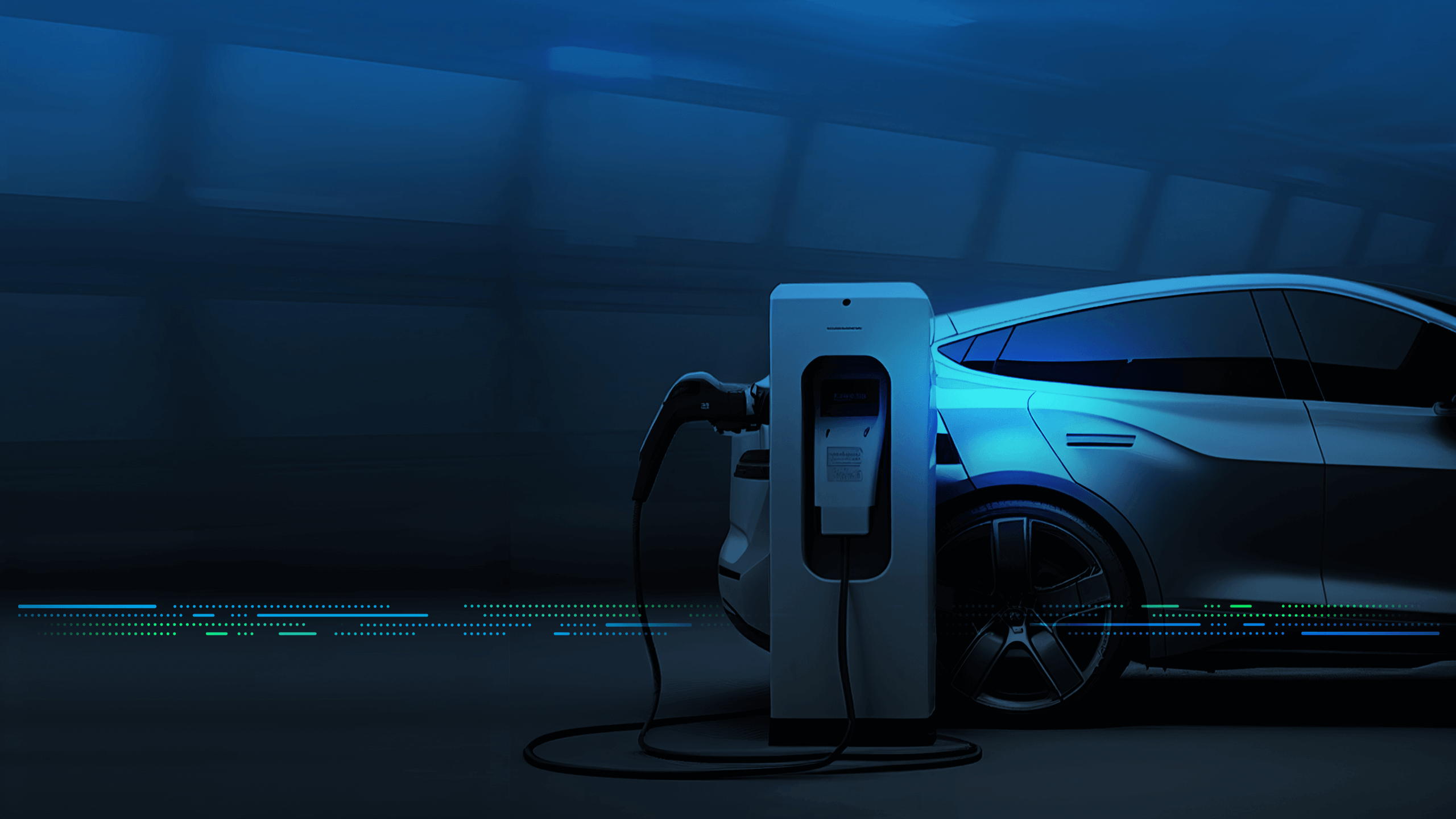
Chroma Regenerative Battery Pack Test System Architecture

Figure 1: Chroma High-Power Regenerative Battery Pack Test System integrated with automated test hardware and safety controllers.
2. Chroma Recommended Test Systems & Technical Specifications Matrix

To meet varying engineering demands—from automotive 800V traction battery validation to commercial grid-scale energy storage rack testing—Chroma provides modular, high-power bidirectional solutions. Below is an engineering recommendation matrix highlighting industry-standard models used by tier-1 battery manufacturers and automotive OEMs worldwide.

Model Series Voltage Range Current Range (Parallelable) Power Rating Energy Recovery Efficiency Primary Target Application
Chroma 17020 Series 20V – 500V DC Up to 2600A 60kW – 300kW > 85% Mid-voltage EV battery packs, LEV packs, power tools, BMS functional validation
Chroma 17040 Series 60V – 1000V DC / 1500V DC Up to 1500A (per channel) 60kW – 600kW+ (Parallelable to MW) > 92% High-voltage 800V/1000V EV traction packs, fast charging dynamic profiles, ESS container testing
Chroma 62000D Series 0V – 1800V DC Up to 540A 6kW – 45kW (per 3U unit) > 93% Bidirectional benchtop/rack development, battery cell/module emulation, OBC & DC-DC testing
Chroma 63800R Series AC 50V – 350V / DC 0V – 500V Up to 150A 9kVA – 15kVA > 89% Regenerative AC/DC load testing for V2G, V2L, and bidirectional onboard chargers

Key Technical Highlights of Chroma 17040 High Power Systems

The Chroma 17040 Regenerative Battery Pack Test System stands out as an enterprise-grade automated test platform engineered specifically for high-voltage battery pack development and production validation:

  • Dual-Channel Independent Sourcing/Sinking: Allows simultaneous charge and discharge testing across multiple battery packs, optimizing equipment utilization in high-volume test labs.
  • Sub-Millisecond Dynamic Current Slew Rate: Capable of achieving dynamic current transition times of <1ms (0 to 90% full scale), enabling accurate execution of urban dynamic driving schedules (UDDS), WLTP, and US06 drive cycles.
  • Energy Recovery to Grid: Recycles high-current discharge power directly back to the 3-phase AC distribution line, drastically lowering utility bills and thermal generation inside climate-controlled test cells.
  • Seamless Integrated Safety Protection: Built-in hardware over-voltage (OVP), over-current (OCP), over-temperature (OTP), thermal runaway shutdown, and external emergency stop (E-Stop) loop inputs tied into environmental chamber interlocks.
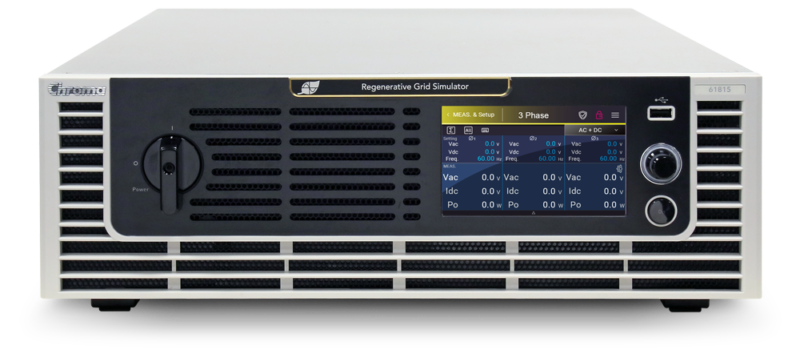
Chroma Bidirectional Power Supply & Regenerative Load

Figure 2: Chroma Bidirectional Source and Regenerative Load Module with dynamic switching technology.

Inquire Now

3. Future Procurement Trends & Technological Evolution in Battery Testing

Procurement directors and test engineering managers must design test facilities with a 5-to-10-year forward vision. The battery landscape is undergoing fundamental transformations driven by chemistry evolution (LFP, NMC, Solid-State, Sodium-Ion) and power architecture changes.

Trend 1: Migration to 800V and 1200V High-Voltage Architectures

Automotive OEMs are rapidly transitioning passenger and commercial EVs from 400V to 800V and 1000V platforms to facilitate Ultra-Fast Charging (350kW+). Consequently, procurement specifications for battery pack cyclers must demand 1500V DC operational headroom. Buying equipment limited to 500V or 800V risks premature obsolescence as battery pack operating voltages rise.

Trend 2: Power Hardware-in-the-Loop (Power HIL) & Digital Twin Testing

Traditional physical testing is shifting toward virtual-physical hybrid testing. Power HIL combines real-time hardware execution with simulated vehicle dynamics software (such as Matlab/Simulink or CarSim). The test system acts as a high-power actuator, dynamically replicating real-time motor back-EMF, regenerative braking spikes, and road load variations directly to the physical battery pack and BMS.

Trend 3: Environmental Chamber & Safety Automation Integration

Future-proof procurement demands seamless communication between the battery cycler, BMS software, data acquisition (DAQ) units, and environmental temperature chambers. Systems must automatically adjust test profiles based on thermal feedback and initiate N2 purging or CO2 suppression upon detecting early-stage thermal runaway (abnormal dV/dt or dT/dt signals).

Trend 4: Carbon Footprint Accounting and Operational Decarbonization

Enterprise ESG mandates require manufacturing facilities to minimize Scope 1 and Scope 2 emissions. Operating a non-regenerative, heat-dissipative battery test rack continuously at 300kW consumes megawatt-hours of power and generates equivalent HVAC cooling loads. Procurement teams are prioritizing test equipment with verified >92% energy recycling credentials to meet corporate sustainability goals.

4. Strategic ROI Analysis: Regenerative vs. Traditional Dissipative Systems

While regenerative battery pack test systems require a higher initial capital expenditure (CAPEX) compared to primitive resistive loads, their operational expenditure (OPEX) savings yield extraordinarily rapid return on investment (ROI).

Real-World ROI Calculation Example (300kW Test Channel)

Operating Parameters: Continuous 300kW battery discharge testing, 16 hours/day, 250 days/year (4,000 operational hours/year). Average industrial electricity rate: $0.14 per kWh.

  • Traditional Dissipative Load: Consumes 300 kW × 4,000 hrs = 1,200,000 kWh/year. Energy cost = $168,000 USD/year. (Excludes additional HVAC cooling power costs to remove dissipated heat).
  • Chroma 17040 Regenerative System (92% Efficiency): Recycles 276 kW back to facility grid. Net energy consumed = 24 kW. Annual energy consumed = 96,000 kWh. Energy cost = $13,440 USD/year.
  • Direct Annual Energy Savings: $154,560 USD per channel/year!
  • HVAC Energy Savings: Additional ~$40,000+ per year saved on chiller/HVAC operational costs.

Conclusion: The CAPEX payback period for upgrading to a Chroma regenerative system is typically achieved within 12 to 18 months of continuous operation.

5. Procurement & Engineering FAQ: Regenerative Battery Pack Test Systems

Below are technical answers to questions frequently submitted by global procurement officers, test lab managers, and engineering teams during system specification:

Q1: How does energy regeneration safely feed power back into our facility's AC grid?

Answer: Chroma regenerative test systems utilize a bi-directional grid-tied inverter featuring Active Front End (AFE) technology. The system measures the facility AC line voltage, phase angle, and frequency, outputting synchronized sinusoidal AC current with a high power factor (>0.99) and extremely low Total Harmonic Distortion (THD < 3%). Built-in anti-islanding protection immediately disconnects the system in compliance with IEEE 1547 and UL 1741 standards during grid blackouts or voltage sags.

Q2: What dynamic switching speed is required for accurate EV drive cycle testing?

Answer: Vehicle dynamic driving profiles (such as WLTP, UDDS, or custom track profiles) involve abrupt acceleration spikes and regenerative braking energy capture. A high-quality test system must offer dynamic current rise/fall response times of <1ms to <5ms with smooth transition across zero current (charge to discharge) without voltage overshoot or oscillation.

Q3: Can multiple test channels be paralleled to increase total power and current capability?

Answer: Yes. Chroma 17040 and 17020 systems feature master-slave digital control architecture. Multiple 60kW or 120kW modules can be seamlessly paralleled to reach megawatt-level (1MW+) test capabilities for high-capacity energy storage containers or heavy-duty commercial vehicle battery packs, operated via a single software panel.

Q4: How does the software integrate with thermal chambers and BMS telemetry?

Answer: Software suites like Chroma BatteryPro communicate simultaneously with battery cyclers, CAN/CAN-FD/LIN data acquisition units, and thermal chamber controllers (via Modbus, TCP/IP, or GPIB). Test steps can automatically pause, hold, or change temperature profile steps based on individual cell over-temperature thresholds, BMS fault codes, or expansion sensor inputs.

Q5: What safety compliance standards apply to battery pack test systems?

Answer: Key international standards governing system safety and battery validation include ISO 26262 (Functional Safety), UN 38.3 (Transport Safety), UL 2580 (Batteries in Electric Vehicles), IEC 62619 (Industrial Lithium-ion Batteries), and IEC 61010-1 (Electrical Safety Requirements for Test Equipment).

Q6: Why choose Silicon Carbide (SiC) based bidirectional cyclers?

Answer: SiC semiconductor switching devices operate at significantly higher frequencies and thermal thresholds than legacy silicon IGBTs. This results in higher power density (smaller equipment footprint), improved conversion efficiency (>93%), reduced acoustic switching noise, and faster dynamic transient response times.

6. Why Global Tier-1 Manufacturers Trust Chroma Systems Solutions

For over 40 years, Chroma Systems Solutions has led the power electronics test industry by delivering reliable, precision-engineered instrumentation and fully automated turn-key test beds. When procuring test infrastructure for mission-critical battery pack validation, industry leaders rely on our core institutional strengths:

40+ Years of Engineering Excellence

Decades of specialized mastery in programmable AC/DC power sources, electronic loads, grid simulators, and high-power automated test equipment (ATE).

Proven >92% Energy Recovery

Market-leading bidirectional power converter designs that minimize operating electricity cost, reduce internal thermal dissipation, and accelerate corporate ESG goals.

Global Service & Support Network

Direct technical support, field calibration, and local engineering service centers spanning the Americas, Europe, and Asia-Pacific regions.

Turnkey Software & HIL Integration

Comprehensive software automation via PowerPro and BatteryPro platforms, supporting hardware-in-the-loop, custom report generation, and database connectivity.

Ready to Optimize Your Battery Pack Testing Architecture?

Consult with Chroma power electronics test experts to configure a custom Regenerative Battery Pack Test System optimized for your specific voltage, current, power, and dynamic response requirements.

Inquire Now