
1. The Critical Role of Insulation & Micro-Short Testing in Modern Battery Manufacturing
As global electric vehicle (EV) architectures transition from standard 400V drive systems to ultra-fast charging 800V and 1200V powertrains, battery cell quality standards have evolved from simple capacity grading to stringent structural dielectric validation. A single microscopic defect—such as an aluminum tab burr, ceramic separator pinhole, anodization layer void, or conductive metallic dust particle—can induce localized dielectric breakdown, creating a high-resistance bridge known as a micro-short circuit.
Unlike catastrophic short circuits that trigger immediate fuse blowing during cell assembly, micro-shorts often manifest as latent degradation mechanisms. Under operational stresses (thermal cycling, fast DC charging, mechanical vibration), micro-shorts deteriorate electrolyte stability, accelerate self-discharge rates (SDR), and in severe scenarios, initiate uncontrolled exothermic reactions leading to thermal runaway.
Conventional electrical safety Hipot testers measure steady-state leakage current under constant voltage. However, battery cells represent massive capacitive loads (often tens to hundreds of microfarads during shell-to-electrode tests). Standard Hipot units misinterpret high capacitive charging currents as dielectric breakdown, or fail to detect millisecond transient flashover arcs due to slow sampling ADCs. A dedicated Battery Cell Insulation Tester incorporates high-speed contact checks (OSC), programmable dwell ramp times, and peak-detecting flashover circuitry capable of analyzing transient discharge impulses down to the sub-microsecond scale.
Chroma Systems Solutions' Battery Cell Insulation Testers are engineered specifically to overcome capacitive loading constraints while delivering millisecond test execution speeds required for high-throughput EV and Energy Storage System (ESS) production lines.
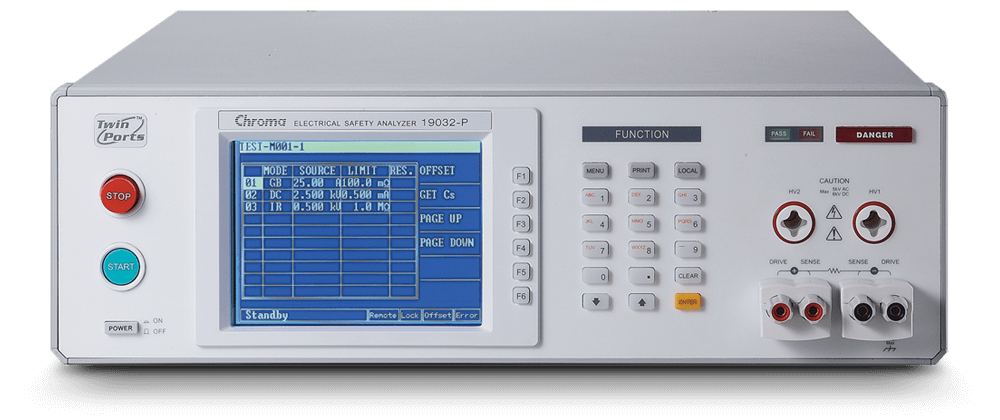
Figure 1: Chroma High-Speed Battery Cell Insulation & Electrical Safety Test System with Multi-Channel Isolation.
2. Dry Cell vs. Wet Cell Insulation Test Methodologies
Global procurement and quality assurance teams must distinguish between two critical stages of insulation verification in battery cell gigafactories:
A. Dry Cell Micro-Short & Insulation Test (Pre-Electrolyte Injection)
Executed immediately after cell stacking or winding and prior to pouch sealing/can insertion and electrolyte filling. At this phase, the separator acts as a dry dielectric barrier between the positive electrode (cathode) and negative electrode (anode).
- Objective: Detect physical contact, foil burrs, alignment faults, or mechanical puncture of ceramic-coated separator materials (PE/PP).
- Test Voltage: Typically DC 50V to DC 1000V depending on separator thickness (e.g., 5µm to 12µm).
- Key Metric: High Insulation Resistance ($IR \ge 100\text{ M}\Omega$ to $10\text{ G}\Omega$) and zero voltage surge collapse during test ramps.
B. Wet Cell & Cell-to-Can Insulation Test (Post-Filling & Formation)
Conducted after electrolyte injection, formation aging, and degas sealing. Tests are performed between the active electrodes and the external cell housing (pouch aluminum-laminated film, prismatic aluminum can, or cylindrical steel casing).
- Objective: Verify the integrity of the cell isolation coating, pouch anodization/insulation film, and tab seals. Ensures no leakage paths exist between internal conductive chemistries and external structural battery module frames.
- Test Voltage: DC 250V to DC 1500V.
- Key Metric: Leakage current limits ($I_{leak} \le 10\mu\text{A}$) and Insulation Resistance ($IR \ge 500\text{ M}\Omega$).
3. Key Engineering Specifications Matrix
When selecting a Battery Cell Insulation Tester for lab validation or turnkey assembly lines, global procurement directors must evaluate key parametric ranges:
| Parameter / Feature | Standard Industrial Hipot | Chroma Battery Cell Insulation Tester | Procurement Value Impact |
|---|---|---|---|
| Test Voltage Range | DC 0.1kV – 5.0kV | DC 10V – 1000V / 2500V (0.1V Resolution) | Prevents over-voltage breakdown of ultra-thin separator film. |
| IR Measurement Range | 1MΩ – 10GΩ | 0.01MΩ – 500GΩ (Accuracy ±2%) | Enables detection of subtle high-resistance leakage paths. |
| Open / Short Check (OSC) | Not available or slow AC check | Patent High-Speed Capacitance OSC (<10ms) | Eliminates false PASS results caused by broken test probes. |
| Flashover / Corona Detect | Basic current limit threshold | High-Frequency Peak Sampling (>10MHz) | Identifies sub-microsecond transient arcs before thermal breakdown. |
| Channel Density | Single channel / External Mux | Up to 256 Isolated Channels per Scanner Unit | Reduces factory footprint and maximizes units-per-hour (UPH). |
| Discharge Energy Safety | Slow passive discharge (>500ms) | Fast Auto-Discharge Circuitry (<20ms) | Ensures operator safety and prevents damage to automated fixtures. |
4. Featured Chroma Battery Cell Insulation Testing Systems
Chroma offers a comprehensive spectrum of programmable insulation analyzers, high-voltage Hipot units, and high-density multi-channel test systems engineered for R&D centers, tier-1 battery suppliers, and gigafactories.
Chroma 11210 Battery Cell Insulation Tester
The flagship analyzer specifically designed for dry cell micro-short and insulation resistance measurement. Equipped with advanced partial discharge and flashover waveform detection circuits.
- Output Voltage: Programmable up to DC 1000V
- Micro-short detection via high-speed voltage sampling
- Contact Check (OSC) prevents false contact pass
- Ultra-fast measurement cycle: <20ms / cell
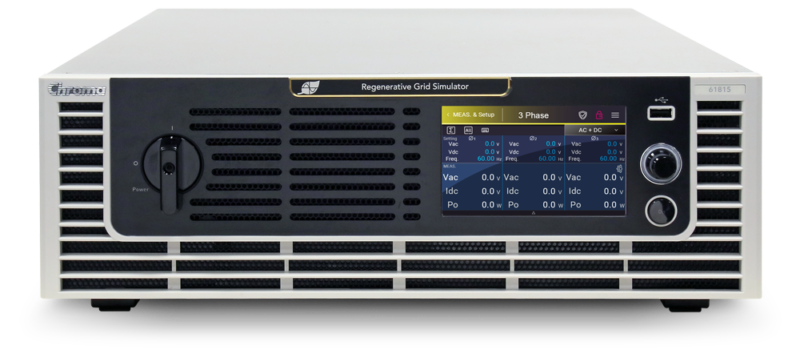
Multi-Channel Cell Insulation Scanner System
High-density multi-channel matrix scanner engineered for modern high-throughput automation lines. Simultaneous insulation and Hipot testing across multiple prismatic or 4680 cylindrical cells.
- Up to 256 isolated channels per 19" rack matrix
- High isolation voltage withstand (>2500V DC)
- Real-time MES integration via Ethernet / PROFINET
- Ideal for cell tray & module dielectric scanning
5. Future Procurement Trends & Technological Evolution (2026–2030)
As energy density increases and manufacturing speeds accelerate, cell insulation testing is undergoing a paradigm shift. Global procurement specialists should align their capital equipment plans with four key technology drivers:
Trend 1: Migration to Solid-State & Semi-Solid Cell Architectures
Solid-state batteries replace liquid electrolytes with thin solid oxide or sulfide ceramic separators. While mechanically robust, solid electrolytes are susceptible to lithium dendrite penetration during formation. Future insulation testers require higher voltage stress testing capabilities (up to DC 2500V) with ultra-precise current resolution down to 0.1nA to detect sub-micron dendrite channels prior to full cell degradation.
Trend 2: AI-Driven Waveform Signature & Partial Discharge (PD) Analysis
Next-generation insulation testers are moving beyond simple PASS/FAIL threshold limits. Advanced algorithms analyze the high-frequency voltage decay and current spikes during the ramp phase. By mapping partial discharge (PD) signatures, AI models can classify defect types—such as identifying whether an insulation flaw is caused by metallic dust contamination, ceramic coating voids, or tab misalignment.
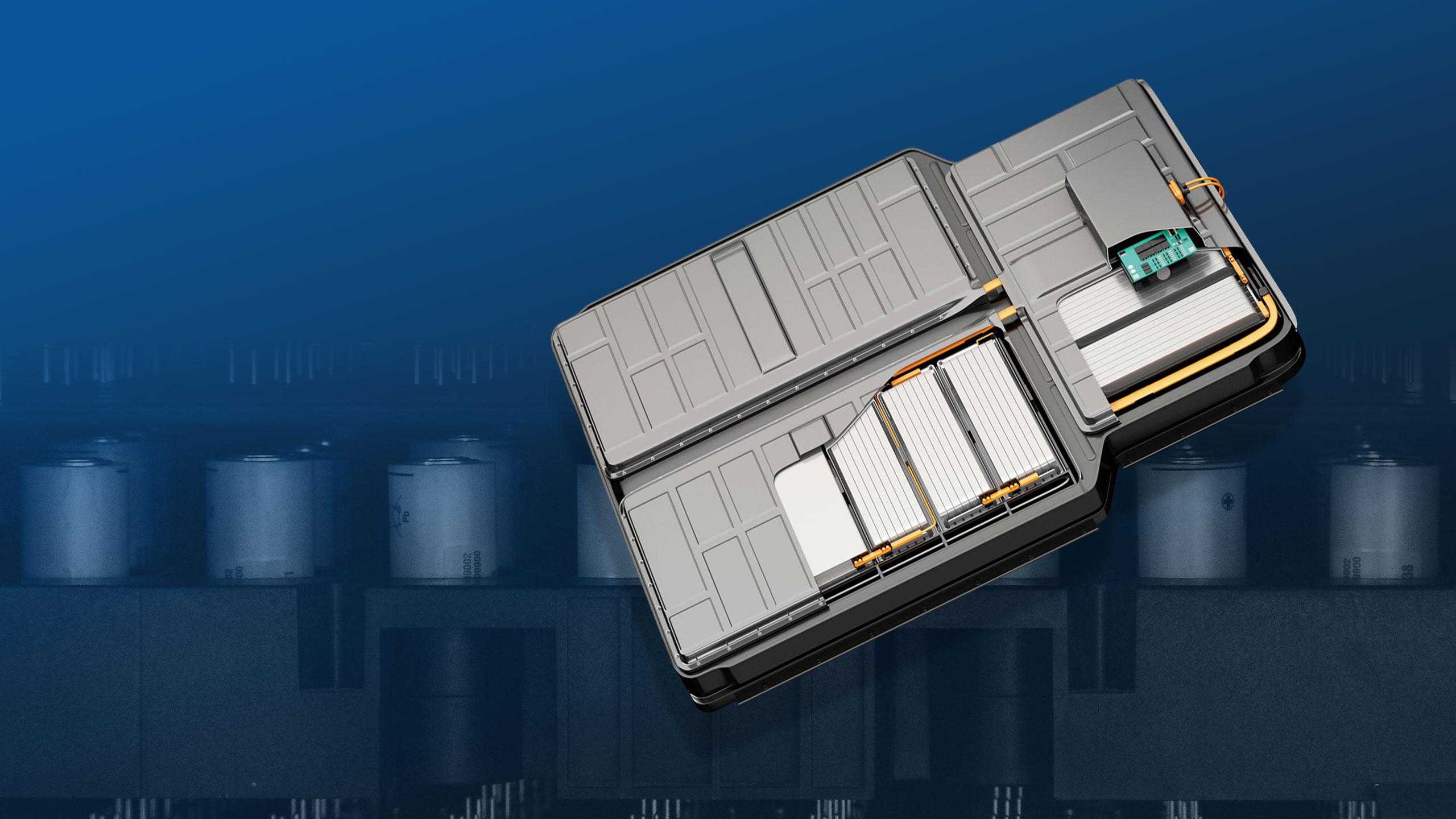
Figure 2: Turnkey Battery Cell Production Environment Integrating Inline Automated Insulation & Micro-Short Testers.
Trend 3: Ultra-High Speed Inline Integration (<100ms Per Cell Cycle Time)
Gigafactories operating at 30 to 60 PPM (parts per minute) per line require insulation testers that can perform contact check, voltage ramp, dwell, measurement, and rapid safety discharge in less than 100ms per channel. Multi-channel matrix architectures with parallel high-speed ADCs are rapidly replacing legacy multiplexed switches to achieve zero production line bottlenecks.
Trend 4: Closed-Loop MES Intelligence and Traceability
Industry 4.0 standards mandate that every cell's insulation resistance value, test voltage curve, and temperature coefficient be logged to its laser-etched QR code. Chroma's automated test software interfaces natively with MES platforms (SAP, Siemens, Rockwell) to enable closed-loop yield optimization and automated quarantine of suspect batches.
6. Enterprise Advantage: Why Global Battery Manufacturers Partner with Chroma
With over 40 years of power electronics test leadership, Chroma Systems Solutions is recognized worldwide by leading EV OEMs, battery cell innovators, and tier-1 system integrators as the benchmark in electrical safety and performance testing.
- Proprietary Micro-Short Detection Technology: Engineered to eliminate destructive over-testing while capturing transient arc flashovers that competitors miss.
- Patented Contact Check (OSC): Guarantees probe contact integrity on high-speed robotic cell handling lines, preventing costly false passes.
- Global Compliance & Certification: Full alignment with international battery standards including IEC 62660-3, UL 2580, GB 38031, UN 38.3, and ISO 6469.
- Global Support Footprint: Dedicated application engineering centers across the Americas, Europe, and Asia to assist with custom fixturing, software drivers, and system integration.