
High Frequency LCR Meter Technical & Procurement Guide: Precision Impedance Validation for Next-Gen Electronics
Electrification, wide-bandgap (SiC/GaN) power semiconductors, 5G RF front-ends, and AI hyperscale power delivery demand uncompromising high frequency component characterization. Discover how Chroma’s advanced High Frequency LCR Meters deliver sub-0.1% basic accuracy, automated parasitic de-embedding, and fast binning speed to empower R&D engineering and high-volume component manufacturing worldwide.
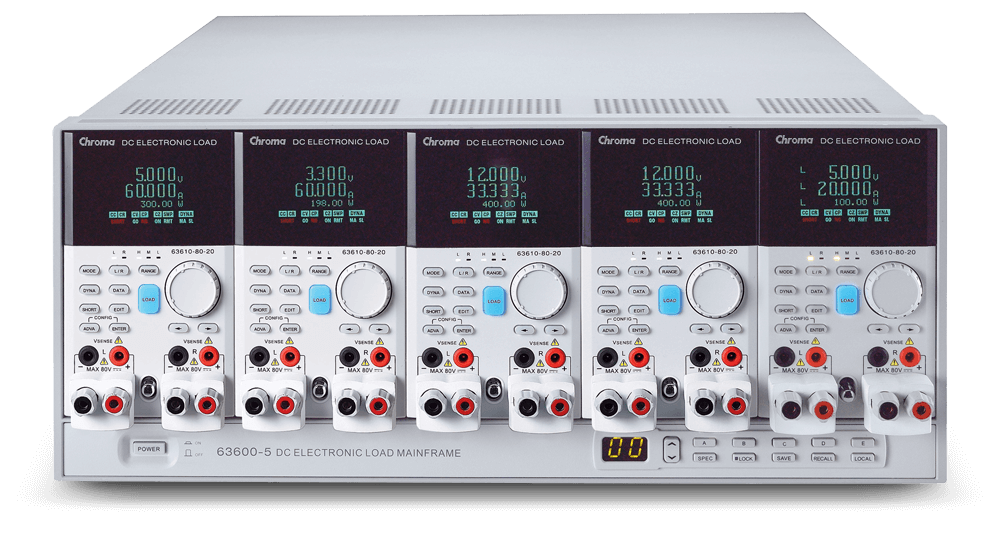
Chroma High Frequency LCR Meter Lineup & Selection Matrix
Whether evaluating ultra-low ESL MLCCs, high-Q RF inductors, magnetic cores under DC bias current, or resonant piezoceramics, selecting the appropriate High Frequency LCR Meter requires balancing test frequency range, basic measurement accuracy, signal level control, and test automation interfaces.
Modern power converters operating at megahertz switching speeds rely heavily on passive components with exceptionally low parasitic inductance and resistance. Standard benchtop LCR meters operating below 100 kHz fail to reveal high-frequency parasitic resonances, self-resonant frequencies (SRF), or core loss transitions. Chroma's High Frequency LCR Meter series bridges this gap with comprehensive sweeping capabilities up to 300MHz, ultra-fast test speeds under 5ms, and integrated multi-bias current options.
| Model Series | Frequency Range | Basic Accuracy | Measurement Parameters | Primary Target Applications | Inquiry |
|---|---|---|---|---|---|
| Chroma 11050 Series | 1kHz to 10MHz / 30MHz | ±0.1% Basic Accuracy | |Z|, |Y|, C, L, X, B, R, G, D, Q, θ, DCR, Rdc | High-frequency transformers, power chokes, MLCC screening, automated component handlers. | Get a Quote |
| Chroma 3302 / 3250 Series | 20Hz to 1MHz / 5MHz | ±0.1% Basic Accuracy | L, C, R, Q, D, ESR, θ, Turn Ratio, Inter-winding C | Multi-pin transformer balance testing, telecom inductors, magnetic component characterization. | Get a Quote |
| Chroma 11021 / 11025 | 100Hz to 100kHz / 1MHz | ±0.1% Basic Accuracy | L, C, R, Q, D, θ, Rdc | High-speed production line sorting, QC incoming inspection, low-cost general laboratory testing. | Get a Quote |
| Chroma HF Impedance Analyzer | 100Hz to 300MHz Wideband | ±0.08% Basic Accuracy | Full Sweeping Impedance Vector |Z|-θ, Cole-Cole, Resonant Frequency, Equivalent Circuit | Advanced RF material characterization, SAW filters, high-Q chip inductors, semiconductor package testing. | Get a Quote |
Sub-Millisecond Sorting Speed
Designed for automated component manufacturing, Chroma High Frequency LCR Meters deliver measurement capture times as fast as 2ms to 5ms with handler interfaces (HANDLER, GPIB, USB, LAN) for seamless integration with high-speed automated taping and sorting equipment.
High-DC Bias Current Superposition
Evaluating power inductors and energy storage chokes under real operating conditions requires high DC bias currents. Chroma systems allow seamless coupling with external DC bias current sources (up to 300A+) without degrading high-frequency AC measurement sensitivity.
Advanced Fixture Compensation
Parasitic capacitance, contact resistance, and lead inductance corrupt high-frequency readings. Chroma instruments feature full Open, Short, Load, and Phase Angle de-embedding algorithms to ensure NIST-traceable measurement accuracy right at the DUT terminals.
Engineering Deep-Dive: Why High Frequency Impedance Measurement Matters
Understanding real-world component behavior requires looking beyond low-frequency datasheets. Component impedance changes dynamically across the frequency spectrum due to physical parasitic phenomena.
At standard low test frequencies (e.g., 1 kHz), an inductor appears almost purely inductive, and a capacitor appears purely capacitive. However, as operating frequencies transition into megahertz ranges, parasitic elements dominate electrical behavior:
The Physics of Self-Resonant Frequency (SRF)
Every real-world inductor possesses distributed winding capacitance ($C_p$) between turns, and every capacitor exhibits equivalent series inductance ($ESL$) from internal leads and terminations. As test frequency increases, the magnitude of inductive reactance ($X_L = 2\pi f L$) increases while capacitive reactance ($X_C = \frac{1}{2\pi f C}$) decreases.
At the Self-Resonant Frequency (SRF), $X_L = X_C$, causing total impedance to reach a extreme peak (for parallel resonance) or minimum (for series resonance). Beyond the SRF, an inductor completely loses its inductive characteristics and becomes purely capacitive—a catastrophic condition in high-speed power conversion and EMI filtering circuits.
High-frequency parametric frequency sweep identifying component phase inversion and parasitic resonances.
Dielectric Loss Tangent ($\tan \delta$) and Quality Factor ($Q$) Degradation
High-frequency energy storage efficiency is dictated by the component's Quality Factor ($Q$), defined as the ratio of stored energy to dissipated energy ($Q = \frac{|X|}{ESR} = \frac{1}{\tan \delta}$). In high-frequency ceramic capacitors (MLCCs) and RF inductors, Skin Effect, Proximity Effect, and dielectric hysteresis cause Equivalent Series Resistance ($ESR$) to non-linearly increase at high megahertz frequencies, causing $Q$ to drop sharply.
A precision High Frequency LCR Meter provides multi-frequency auto-sweeping, Cole-Cole impedance locus plots, and equivalent circuit model analysis (3-element or 4-element models). This allows engineering teams to accurately model parasitic resistance, inductance, and capacitance before committing designs to mass production.
Information Gain Insight for Component Selection
Measuring an inductor at 100 kHz will conceal core saturation and inter-winding capacitance losses occurring at 5 MHz. Utilizing a high frequency LCR meter with sweep mode allows procurement and quality assurance teams to verify that vendor components maintain specified $L$ values and high $Q$ factors under actual switching frequencies of modern GaN and SiC power converters.
Global B2B Procurement Trends for High Frequency LCR Meters
Insights into how tier-1 automotive, AI server, renewable energy, and semiconductor procurement managers are transforming component testing strategies.
Global electronics supply chains face unprecedented quality demands. Procurement specifications are moving away from simple static testing toward high-frequency dynamic validation. Four key procurement macro-trends are driving high-frequency LCR meter investments worldwide:
1. The Transition to Wide-Bandgap (SiC & GaN) Power Architectures
Next-generation Electric Vehicle (EV) onboard chargers (OBC), DC-DC converters, and AI server power supply units (PSU) are transitioning from traditional Silicon MOSFETs to Silicon Carbide (SiC) and Gallium Nitride (GaN) devices. These wide-bandgap semiconductors operate at switching frequencies ranging from 500 kHz to over 5 MHz. Consequently, procurement teams must source high frequency LCR meters capable of validating passive power inductors, planar transformers, and decoupling capacitors at these elevated operational frequencies.
2. Mandatory High-DC Bias Testing for Automotive & Aerospace Electronics
In EV powertrains and energy storage systems (ESS), inductors carry high DC currents superimposed on high-frequency AC ripple currents. Standard zero-bias component testing fails to detect magnetic saturation (inductance drop under DC load). B2B buyers now mandate LCR test setups equipped with high-current DC bias units (such as Chroma’s test system configurations) to guarantee that components comply with AEC-Q200 stress standards under combined high AC frequency and DC current stress.
3. Zero-Defect Inline Automation & Data Traceability
High-volume component manufacturers are phasing out manual bench testing in favor of fully automated inline test handlers. Modern high frequency LCR meters must support high-speed handler interfaces, multi-channel switching matrices, and real-time statistical process control (SPC) data output via LAN or Industry 4.0 protocols. Fast test throughput (<5ms/point) has become a primary KPI for procurement teams calculating total cost of ownership (TCO).
4. De-Risking Component Substitution & Counterfeit Mitigation
Global supply chain volatility requires engineering and purchasing teams to constantly qualify alternative second-source component suppliers. High frequency LCR sweeping serves as a definitive "fingerprint" verification method. By comparing the complete frequency spectrum impedance response of second-source MLCCs or inductors against original benchmark components, quality control managers eliminate sub-standard or counterfeit components prior to PCB assembly.
Future Development Trends in High Frequency Impedance Measurement
Emerging technology roadmaps shaping the next generation of precision LCR meters and impedance analyzers.
AI-Assisted Parasitic De-Embedding
Future high frequency LCR meters are incorporating machine-learning calibration algorithms that automatically model complex fixture parasitic inductances and contact resistances. This simplifies open/short/load calibration routines and eliminates operator measurement errors in ultra-high frequency domains.
Integrated Multi-Environmental Sweeping
Thermal stability is critical for automotive power electronics. Next-generation impedance test benches integrate precision LCR meters directly with thermal stream chambers, enabling simultaneous high-frequency sweeps across extreme temperature ranges (-55°C to +175°C).
Multi-Port Vector Impedance Analysis
As integrated multi-winding magnetic modules and integrated passive devices (IPDs) proliferate in 5G and AI hardware, test equipment is evolving from traditional 2-terminal / 4-terminal pair configurations to multi-port matrix sweeping for simultaneous inter-winding coupling analysis.
Why Global Manufacturers Partner with Chroma Systems Solutions
Experience, Expertise, Authoritativeness, and Trustworthiness (E-E-A-T) built over four decades of power test innovation.
For over 40 years, Chroma Systems Solutions has stood as a global leader in high-precision power electronics and component test equipment. Our high frequency LCR meters and automated test systems are trusted by leading technology enterprises, tier-1 automotive suppliers, research laboratories, and aerospace prime contractors worldwide.
Unrivaled Metrology Expertise & ISO 17025 Calibration
Every Chroma high frequency LCR meter is engineered with low-noise analog front-ends, high-speed digital signal processing (DSP), and NIST-traceable factory calibration. Our ISO/IEC 17025 accredited calibration facilities ensure your measurement integrity complies with stringent international quality standards, including ISO 9001, IATF 16949, and AEC-Q200 testing protocols.
Turnkey Fixturing and Automated Test System Integration
Measurement accuracy depends heavily on test fixturing. Chroma offers a complete line of precision SMD test fixtures, axial/radial lead adapters, magnetic core fixtures, and custom handler interface kits. Our engineering teams specialize in delivering complete automated component test systems—combining high frequency LCR meters, Hipot safety testers, and automated handling robotics into unified turn-key production lines.
Frequently Asked Questions (FAQ) — High Frequency LCR Meter Procurement
Expert answers to the most common technical and purchasing questions asked by engineers and procurement specialists when searching for high frequency LCR meters.
Selection depends on your DUT's operating environment. For standard power inductors and SMPS components operating under 500 kHz, a 1 MHz LCR meter (such as the Chroma 3302 series) is sufficient. For SiC/GaN fast-switching power converters (1 MHz to 10 MHz), a 10 MHz or 30 MHz LCR meter (such as the Chroma 11050 series) is required to evaluate parasitic SRF and high-frequency core loss. For RF inductors, chip capacitors, microwave ceramics, or semiconductor packages, wideband sweep systems operating up to 100 MHz – 300 MHz are recommended.
While both instruments measure impedance ($Z$), a standard high frequency LCR meter typically measures single spot frequencies or stepped frequencies to output numerical parameter pairs (e.g., $L$ & $Q$, $C$ & $D$). An Impedance Analyzer performs continuous frequency sweeps across a wide spectrum, generating graphical vector analysis curves ($|Z|-\theta$, Cole-Cole plots, equivalent circuit resonance analysis). Chroma offers high-frequency LCR meters equipped with graphical frequency sweep functions, providing the analytical power of an impedance analyzer at a cost-effective price point for production and R&D.
At high frequencies, test leads and fixtures introduce residual inductance, stray capacitance, and lead resistance that corrupt measurement data. To ensure accuracy, Chroma high frequency LCR meters utilize a 4-Terminal Pair (4TP) architecture that isolates signal drive lines from sense lines. Furthermore, built-in Open, Short, and Load calibration functions automatically de-embed residual fixture impedance, ensuring measurements reflect pure DUT parameters.
Power chokes and inductors in power supplies carry a combination of high DC load current and high-frequency AC ripple current. As DC current increases, magnetic core saturation occurs, causing inductance ($L$) to drop sharply. Testing an inductor without DC bias current will yield an artificially high inductance value. Coupling a Chroma high frequency LCR meter with an external DC Bias Current module allows engineers to measure true inductance roll-off curves under full operational DC current load.
Chroma LCR meters are engineered for fast automated test lines, delivering measurement speeds as fast as 2ms to 5ms per test point. Equipped with opto-isolated HANDLER interfaces, GPIB, USB, and Ethernet (LAN), Chroma instruments interface seamlessly with automated component taping, sorting, and inline optical inspection machinery for 100% high-speed quality screening.
All Chroma High Frequency LCR Meters ship with ISO/IEC 17025 accredited, NIST-traceable calibration certificates. Chroma operates direct global service, repair, and calibration centers across North America, Europe, and Asia-Pacific, offering local technical support, application engineering assistance, and rapid turnaround maintenance services.