
Technical Blog & Insights

Power Electronics & Test Technical Knowledge Base

Explore technical articles, industry insights, and power testing innovations from Chroma engineering experts.
0%

As electric-vehicle production grows, battery testing needs equipment that can handle higher power without wasting energy as heat. The International Energy Agency’s Global EV Outlook 2024 reports nearly 14 million electric-car sales in 2023, about 18% of global car sales. That figure is not a market-size estimate for regenerative loads. It does, however, show why dependable battery-test infrastructure matters.

A Regenerative DC Electronic Load absorbs power from a device under test and returns some energy to the supply or grid, depending on its design. The details matter. Compare operating voltage, current, power, recovery efficiency, transient response, control interfaces, and available technical support. A datasheet’s headline efficiency alone cannot show performance across every operating point. That distinction is easy to miss.

Energy-efficiency expert Fatih Birol, executive director of the IEA, has used the phrase, “Energy efficiency is the first fuel.” It is a useful principle here, though not a product-specific endorsement. For a trustworthy supplier comparison, buyers should check published test conditions, independent certifications, warranty terms, and service coverage. Real laboratory needs vary.

The top suppliers may differ sharply in integration effort and long-term support. No single ranking fits every test bench. The introduction to this list therefore focuses on practical selection criteria, not unsupported market-share claims. A verified, attributable quotation from a specialist focused specifically on regenerative DC electronic loads was not available in the supplied material, so none is invented.
Top 10 Regenerative DC Electronic Load Suppliers?

How Regenerative DC Electronic Loads Work

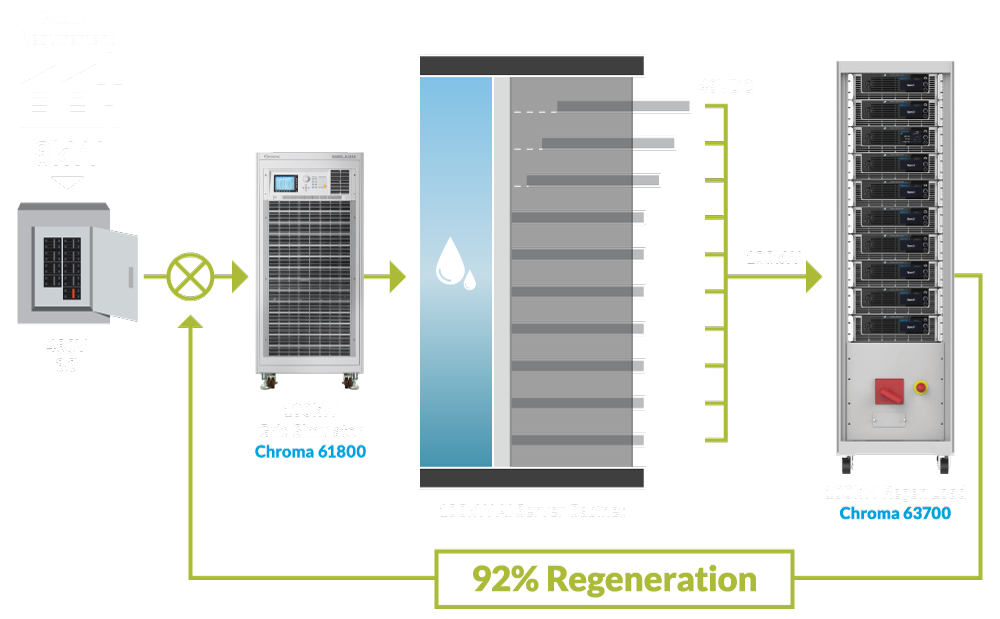
A regenerative DC electronic load draws controlled current from a device under test, such as a battery, DC power supply, or solar inverter output. Its control circuit adjusts the load to match a chosen current, voltage, or power profile. Instead of turning most absorbed energy into heat, the unit converts DC power into AC through an inverter and sends usable energy back to a compatible electrical supply. Some energy is still lost inside the conversion process.

The control loop matters. When a battery voltage shifts during discharge, the load must respond without overshooting the requested current. Engineers often check response time, measurement accuracy, and behavior at low voltage before running long tests. A changing load profile can reveal how a power source handles sudden demand. Watch the limits.

Regeneration is not automatic proof of efficiency or suitability. The return path must support the equipment’s power and voltage range, and the test setup needs appropriate electrical protection. In a lab, cables, connectors, and supply capacity can affect results as much as the load itself. One detail is easy to miss: returned energy may not be available to the same circuit that supplied the test equipment. Real setups can be less neat than diagrams suggest.

Key Criteria for Evaluating Suppliers

When comparing regenerative DC electronic load suppliers, start with the operating range your test bench actually needs. Check voltage, current, power, and transient response separately; a wide headline rating can hide limits at specific operating points. Ask for continuous and peak ratings, derating curves, and cooling requirements. Regenerative units return captured energy to a facility supply, so review efficiency data and installation needs under realistic loads. Request test reports showing stability, ripple, protection behavior, and recovery after abrupt load changes. A polished specification sheet is not enough.

Tips: Compare identical operating points across supplier quotes. Ask what test conditions produced each result, and keep the answers in writing.

Also assess measurement accuracy, calibration documentation, software interfaces, and integration support. Ask how quickly technical staff respond, and whether they can help diagnose a failed test setup. Check warranty coverage and the availability of replacement parts. These details can affect uptime as much as rated power. One point is easy to underestimate: published performance may not match your cable lengths, ambient temperature, or duty cycle. Share those conditions before requesting a proposal. Even a careful checklist can miss something; verify the unit against your own test plan before making a final selection.

Profiles of Ten Regenerative DC Electronic Load Suppliers

A useful profile of ten regenerative DC electronic load suppliers should compare capabilities, not slogans. One supplier may focus on high-power industrial racks; another, on modular units that fit a crowded test bench. A precision-lab specialist may prioritize low-current resolution and repeatable measurements. Automotive-focused suppliers often build around battery and inverter workflows. Some serve battery makers with cycling systems and detailed logging. Others design equipment for aerospace labs, where traceable test records matter. There are also education-focused suppliers, custom engineering teams, energy-storage specialists, and service-led providers. Each profile should explain its likely strengths and limits.

Look beyond rated power. Check voltage and current ranges, recovery efficiency, control modes, protection features, and whether the system can return energy safely to the facility supply. Ask how performance changes across the operating range, not only at a headline rating. Request clear test conditions and support terms. A polished specification sheet helps, but it cannot show how quickly a supplier resolves a setup problem. Small details count. Cable access, cooling noise, and software usability can shape daily work. Comparisons are imperfect, too: a compact laboratory load and a large production system solve different problems. The most credible profiles admit that distinction and state what remains unverified.

Comparing Product Capabilities and Support

Supplier comparisons should start with the bench task: battery discharge, inverter testing, or DC-bus validation. A regenerative DC load must absorb power and return it to the grid without unstable transitions. Check its voltage and current range, four-quadrant operation, transient response, measurement accuracy, and parallel-channel limits. Look beyond peak ratings. Request efficiency data across operating points; a high power rating may conceal weak low-load performance. The IEA’s Global EV Outlook 2024 reports nearly 14 million electric car sales in 2023 and more than 750 GWh of EV battery demand. That growth makes repeatable, energy-aware testing increasingly relevant, though it does not prove every supplier serves every application.

Support quality is part of the product. Ask whether application engineers can review a test setup, explain protection limits, and help troubleshoot unusual waveforms. Check calibration documentation, software updates, interface examples, and the stated repair process. Response commitments matter when a test station is down. I would not treat a polished datasheet as proof of field readiness. Ask for a demonstration using representative load profiles, and verify recovery behavior at the power levels your lab actually uses. No single score tells the whole story. A supplier may offer broad specifications but limited integration guidance; another may provide clearer setup support with fewer configuration options. Make that trade-off explicit in the comparison.

Regenerative DC Electronic Loads: Power Envelope Examples

Use the calculated power levels below as a starting point when comparing supplier offerings. Power is calculated as voltage × current; these are example operating points, not specifications or rankings for any supplier.

What to check: Confirm each load’s voltage, current, and power limits, as well as its regenerative return capability, operating modes, protection features, and technical support.

Choosing a Supplier for Specific Testing Needs

Selecting a regenerative DC electronic load supplier starts with the test, not the catalog. Define the voltage, current, and power envelope, then verify that the equipment can sink energy across the full range. A high-voltage battery test may require stable operation at low current as well as near peak load. Tiny details matter. Check transient response, load-step behavior, and measurement accuracy at your actual operating points, not only at a headline rating.

Ask suppliers for test data, calibration details, and clear operating limits. Confirm how the system handles overvoltage, overtemperature, and communication loss. If energy is returned to the electrical supply, ask how efficiency is measured and what installation conditions apply. Request a demonstration using a representative test profile, including repeated load changes. A polished specification sheet can still leave practical questions unanswered. That gap is worth probing.

Software and service also shape the choice. Check whether control interfaces fit your existing test setup, and whether logs capture voltage, current, power, and fault events with usable timestamps. Ask about training, repair turnaround, and access to replacement parts. A low purchase price may not help if an interrupted test delays a project. It is easy to overvalue the maximum power rating; I would compare usable operating range and support just as carefully. No supplier fits every lab.

FAQS

What should I check before comparing regenerative DC electronic load suppliers?

Define the voltage, current, power, and transient response your test bench needs. Check continuous and peak ratings separately. Small details matter.

Why can a headline power rating be misleading?

A unit may reach its maximum rating only at certain voltage and current levels. Compare performance at your actual operating points, and request derating curves.

How can I assess energy recovery performance?

Ask how efficiency was measured and under what load conditions. Confirm installation requirements for returning energy to the facility supply. Results may vary.

What test evidence should I request?

Request reports on stability, ripple, measurement accuracy, protection behavior, and recovery after sudden load changes. Ask for the test conditions in writing.

How should I check a unit’s protection features?

Confirm its response to overvoltage, overtemperature, and communication loss. A representative demonstration can reveal gaps that a specification sheet misses.

What software and logging details are important?

Check that control interfaces fit your existing setup. Logs should record voltage, current, power, and fault events with useful timestamps. Not always obvious.

How do service and parts affect supplier choice?

Ask about technical response times, repair turnaround, training, warranty coverage, and replacement parts. A delayed repair can interrupt a test schedule.

How do I match a supplier to my lab?

Compare the supplier’s strengths with your testing needs: modular bench work, high-power systems, or precise low-current measurements. No supplier fits every lab. I may still miss a detail; validate the unit against your own test plan.

Conclusion

This article explains how a Regenerative DC Electronic Load draws power from a device under test and returns energy to the electrical supply rather than dissipating it entirely as heat. It outlines the operating principles behind regenerative testing and the benefits this approach can offer in efficiency, thermal management, and continuous test environments. Readers will also find practical criteria for evaluating suppliers, including power and voltage ranges, operating modes, measurement accuracy, safety features, software integration, and technical support.

Profiles of ten supplier options provide a framework for comparing product capabilities and service offerings without assuming that one solution suits every application. The article considers how to match equipment to specific testing needs, from component characterization to system-level validation, while weighing setup requirements, scalability, documentation, and after-sales assistance. These comparisons are intended to help readers make a well-informed choice based on their test objectives, facility constraints, and long-term plans.

Ethan

Ethan

Ethan is a seasoned marketing professional with a deep-rooted expertise in our company's product offerings. His passion for the industry shines through in his meticulous research and insightful analysis, ensuring that our customers receive the most accurate and beneficial information. As a key......