
Technical Blog & Insights

Power Electronics & Test Technical Knowledge Base

Explore technical articles, industry insights, and power testing innovations from Chroma engineering experts.
0%

Choosing among the Top Lithium Ion Battery Cell Formation Systems requires more than comparing equipment prices. Formation shapes a cell’s initial performance, safety, cycle life, and manufacturing consistency. A reliable system must control charging, discharging, temperature, current, voltage, and rest periods with precise coordination.

In practical production, engineers inspect cabinet layouts, channel accuracy, thermal uniformity, software traceability, and maintenance access. A formation rack may process thousands of cells, yet one unstable channel can distort an entire production batch. Strong systems record every voltage curve and temperature change, allowing teams to identify abnormal cells before shipment. Performance varies. Laboratory results can also differ from factory results because cell chemistry, electrode design, and operating conditions change.

This guide examines leading technologies through measurable criteria rather than promotional claims. It considers energy efficiency, production capacity, data integrity, safety controls, integration options, and long-term service support. Experienced manufacturers usually evaluate equipment with pilot runs, repeatability tests, and realistic loading conditions. That approach reveals practical weaknesses, including calibration drift, software limitations, and difficult spare-parts access.

No single platform fits every factory. A compact laboratory system may offer better flexibility, while a high-volume line demands automation and stable thermal management. Some supplier claims remain difficult to verify without independent testing. Evidence matters. The most credible evaluation combines technical specifications, operator feedback, documented test results, and lifecycle costs. Readers should treat rankings as guidance, not permanent truth, because battery materials and formation strategies continue to evolve.
Top Lithium Ion Battery Cell Formation Systems?

What Is a Lithium-Ion Battery Cell Formation System?

Top Lithium Ion Battery Cell Formation Systems?

What Is a Lithium-Ion Battery Cell Formation System?

A lithium-ion battery cell formation system controls the first controlled charging and discharging cycles of a newly assembled cell. This stage helps activate the electrode materials and build a stable solid electrolyte interphase layer. That protective layer strongly affects capacity, safety, and long-term performance.

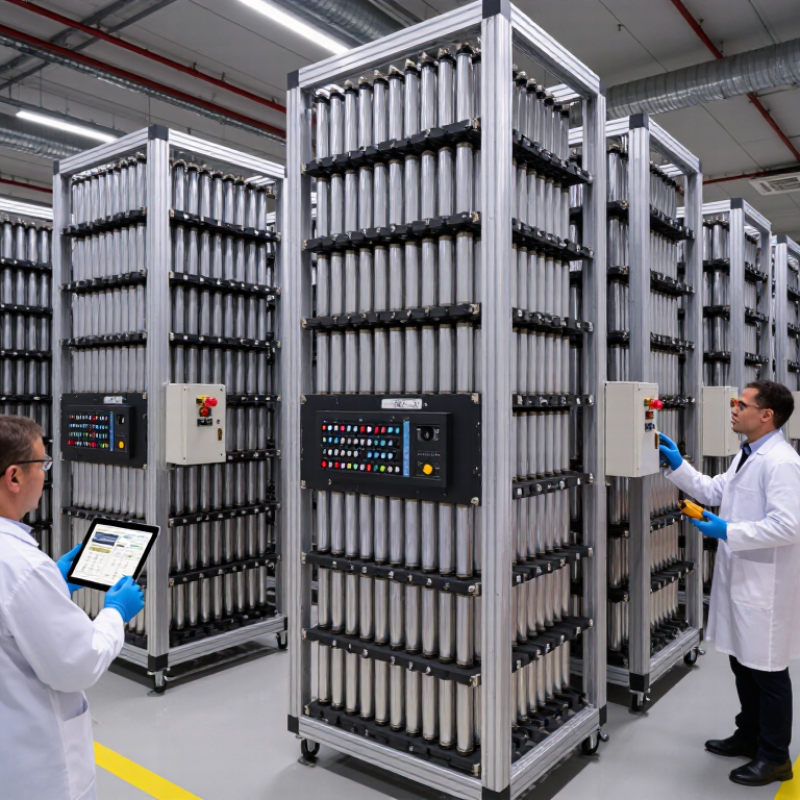
A formation system usually includes charging channels, discharge circuits, temperature sensors, electrical measurement units, and control software. Each cell receives a programmed current and voltage profile. The equipment may also pause between steps, allowing heat and internal reactions to settle. Operators monitor voltage curves, surface temperature, energy efficiency, and abnormal changes. Small differences matter.

In practical production, formation equipment must provide stable contact with every cell. A loose connection can create misleading data or uneven charging. Accurate calibration is essential. So is clean data recording. Production engineers often compare cell behavior across batches, then adjust current limits, rest periods, or temperature controls. The process is not flawless. A neat graph can still hide a weak connection or a sensor error. This is why reliable systems use alarms, traceable test records, and independent safety limits. Formation does not repair poor electrode coating or assembly defects. It reveals them, sometimes later than expected. A thoughtful design treats the system as both a conditioning tool and a measurement platform.

How Cell Formation Activates and Stabilizes Battery Chemistry

Top Lithium Ion Battery Cell Formation Systems?

How Cell Formation Activates and Stabilizes Battery Chemistry

Cell formation is the controlled first charging cycle of a lithium-ion cell. It activates the electrodes and builds the solid electrolyte interphase, or SEI, on the anode. This thin layer limits further electrolyte breakdown while allowing lithium ions to move. The cathode also develops protective surface chemistry. Small voltage and temperature changes matter here.

A modern formation system controls current, voltage, pressure, temperature, and rest time across many channels. It records each cell’s voltage curve, heat response, and gas generation. The IEA’s Global EV Outlook 2024 reported more than 750 GWh of electric-vehicle battery demand in 2023. That scale makes repeatable formation essential. BloombergNEF’s 2023 Battery Price Survey placed average pack prices at 139 dollars per kWh, increasing pressure to reduce early defects and energy waste.

Formation is not simply “charge, then wait.” Low initial current can reduce uneven SEI growth, while carefully timed rests help chemistry settle. Some cells still need elevated-temperature aging, depending on their materials and electrolyte. No single recipe fits every design. That is the difficult part. Experienced engineers compare formation data with later capacity, impedance, and safety results. A system may look efficient while hiding weak cells. Better traceability, calibrated sensors, and conservative process limits often reveal those weaknesses before shipment.

Which Technologies Define High-Performance Formation Systems?

High-performance lithium-ion cell formation systems begin with precise current and voltage control. During constant-current and constant-voltage stages, low ripple protects cells from uneven reactions. Multi-channel architecture lets operators adjust profiles for different chemistries and capacities. It also isolates abnormal channels before a small defect becomes a costly batch issue. Fast sampling matters. Temperature sensors placed near each cell reveal heat buildup that cabinet averages can hide. Air cooling may work for moderate loads, but liquid-assisted thermal control offers tighter stability during aggressive schedules. Yet tighter control does not automatically mean better cells; electrode design and electrolyte behavior still set the practical limit.

Reliable systems combine formation with measurement, not just power delivery. Electrochemical impedance checks, voltage relaxation data, and capacity estimates can expose weak cells early. Automated grading should use traceable rules, while engineers retain access to raw waveforms. Otherwise, a neat dashboard may conceal an incorrect threshold. That risk is easy to underestimate.

Safety engineering also defines performance. Independent current limits, insulation monitoring, smoke detection, and controlled shutdowns reduce operational risk. A well-designed chamber keeps neighboring channels stable when one cell fails. Data logging should connect cell identity, recipe, temperature, and operator actions for later audits. In production trials, I would compare yield, energy use, cycle time, and measurement repeatability—not cycle time alone. Some systems advertise speed while ignoring calibration drift. That weakness deserves scrutiny. Formation recipes need validation across lots, seasons, and aging equipment, because laboratory success can become factory inconsistency.

How to Evaluate Formation System Quality, Efficiency, and Safety

Evaluating a lithium-ion battery formation system starts with measurement quality, not advertised throughput. The IEA’s Global EV Outlook 2024 reported that electric-vehicle battery demand exceeded 750 GWh in 2023, rising by about 40%. At this scale, small calibration errors can multiply across thousands of cells. Check current and voltage accuracy, channel consistency, temperature uniformity, and traceable data records. A reliable system should identify abnormal voltage curves before cells enter aging or testing.

Efficiency needs practical evidence. Measure energy consumed per ampere-hour, channel utilization, cycle time, and recipe-changeover losses. A high throughput number can mislead. Idle channels, long stabilization periods, or frequent manual resets may reduce real output. Engineers should compare factory acceptance data with production results. The gap is often uncomfortable.

Safety requires layered controls. Review electrical isolation, door interlocks, over-temperature protection, gas monitoring, and emergency shutdown logic. The U.S. Department of Energy’s National Blueprint for Lithium Batteries emphasizes resilient manufacturing and safer battery production across the supply chain. Formation equipment should also provide event logs, remote alarms, and clear maintenance access. Operators need visible status indicators, not hidden software warnings. No system is perfect. A useful audit records near-misses, sensor drift, and failed alarms, even when production targets are met. Calibration intervals should reflect actual operating conditions, not only the supplier’s standard schedule.

Top Lithium Ion Battery Cell Formation Systems? - How to Evaluate Formation System Quality, Efficiency, and Safety

Evaluation Dimension What to Examine Recommended Engineering Benchmark Why It Matters Suggested Evidence
Current Accuracy Accuracy and repeatability of charge and discharge current across all channels. Approximately ±0.1% to ±0.5% of full-scale current, verified under calibrated conditions. Stable current control supports consistent solid-electrolyte-interphase formation and improves cell-to-cell consistency. Calibration certificates, channel-to-channel test data, and long-duration drift results.
Voltage Measurement Voltage measurement accuracy, resolution, sampling rate, and open-wire detection. Measurement accuracy typically within ±0.05% to ±0.1% of full scale, with millivolt-level resolution. Accurate voltage control prevents overcharge, undercharge, and incorrect termination decisions. Independent meter comparison, resolution specification, and fault-injection test records.
Temperature Control Chamber or rack temperature uniformity, sensor accuracy, airflow, and thermal response. Temperature uniformity of approximately ±1 °C to ±2 °C, with independent over-temperature protection. Formation reactions are temperature-sensitive; uneven temperature can cause capacity and aging variation. Thermal mapping at empty and loaded conditions, sensor calibration, and alarm-response tests.
Formation Profile Flexibility Support for constant-current, constant-voltage, pulse, rest, step, and multi-stage recipes. Recipe editing should support programmable current, voltage, time, rest periods, termination limits, and conditional steps. Different cathode, anode, electrolyte, and cell formats require different formation strategies. Demonstration recipes, version control, change history, and recipe-locking functions.
Channel Density Number of independently controlled channels per rack, cabinet, or production footprint. High-density systems should maintain electrical isolation, thermal uniformity, service access, and independent fault handling. Higher density can reduce floor-space cost, but poor isolation can increase downtime and safety risk. Layout drawings, channel derating curves, maintenance access review, and independent-channel tests.
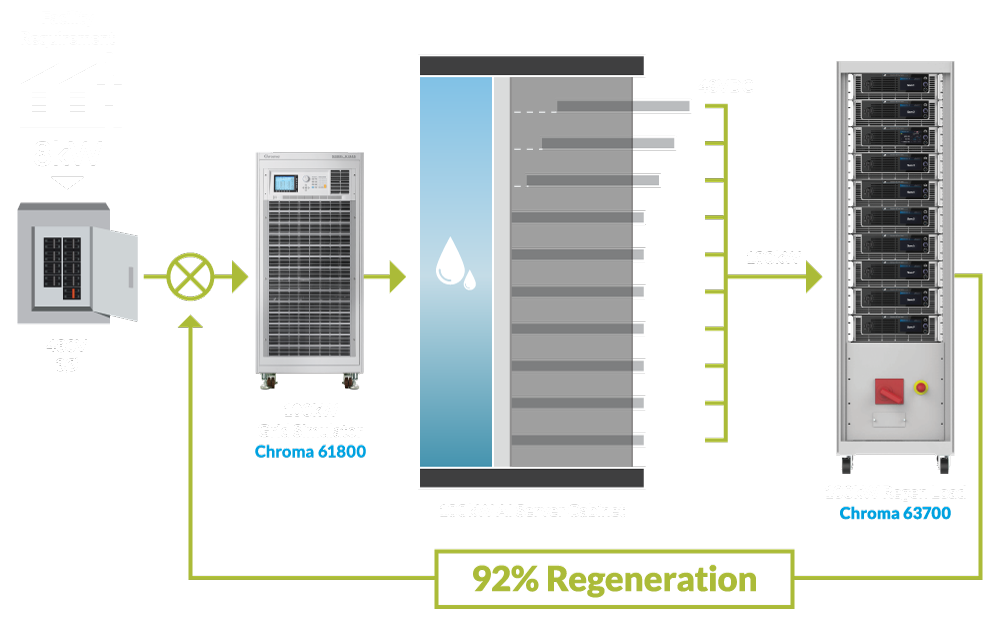
Energy Efficiency Power-conversion efficiency, idle consumption, cooling demand, and discharge-energy recovery. Evaluate total facility energy rather than charger efficiency alone; regenerative discharge can substantially reduce wasted energy. Formation may run for many hours, so power losses and cooling loads strongly affect operating cost. Measured kWh per formed cell, power-quality data, heat-load calculations, and regeneration results.
Process Time Recipe duration, rest periods, temperature conditioning, and transfer time between operations. Conventional formation commonly requires roughly 12–48 hours, depending on chemistry, cell design, and recipe complexity. Shorter validated cycles increase throughput, but excessive acceleration can reduce cell life or increase defect risk. Cycle-time study, capacity-retention comparison, throughput model, and pilot-line validation.
Data Acquisition Sampling frequency, timestamp accuracy, data completeness, storage, and export formats. Time-synchronized current, voltage, temperature, status, alarm, and recipe data should be retained for every channel. Complete traceability supports root-cause analysis, quality release, and regulatory documentation. Sample data files, retention policy, audit trail, API or database interface, and backup procedure.
Safety Protection Over-voltage, over-current, over-temperature, reverse-polarity, open-wire, insulation, smoke, and emergency-stop functions. Protection should be independent where practical, fail-safe, latched for critical faults, and verified by functional testing. Lithium-ion cells can enter thermal runaway when abused; early detection and rapid energy isolation are essential. Safety risk assessment, fault-tree analysis, alarm matrix, emergency-stop validation, and maintenance records.
Thermal-Event Management Gas or smoke detection, ventilation, fire suppression, containment, and propagation control. The design should be based on cell chemistry, stored energy, local fire code, ventilation requirements, and documented hazard analysis. A formation area contains many energized cells, making event containment and evacuation planning critical. Hazardous-area review, detection coverage map, suppression design, evacuation plan, and incident simulations.
Electrical Isolation Isolation between channels, chassis, power circuits, measurement circuits, and the facility ground. Use documented insulation-resistance limits, ground-fault detection, protective bonding, and periodic verification appropriate to the equipment design. Isolation faults can create shock hazards, measurement errors, unintended current paths, or cascading equipment failures. Electrical schematics, insulation tests, grounding tests, and compliance assessment by a qualified engineer.
Automation Integration Interfaces with manufacturing execution systems, warehouse systems, barcode readers, and inspection equipment. Support for common industrial communication methods, recipe authorization, electronic records, and bidirectional status exchange. Integration reduces manual errors and links each cell to its process history and quality disposition. Interface control document, cybersecurity review, simulated data exchange, and end-to-end traceability test.
Yield and Quality Metrics Formation yield, capacity distribution, internal-resistance distribution, leakage current, and defect rate. Set acceptance limits from statistically significant pilot data; monitor mean, standard deviation, outliers, and trend drift. A technically accurate system is not effective if it produces large variation or requires excessive rework. Pilot batches, statistical process-control charts, measurement-system analysis, and product-release criteria.
Maintainability Module replacement, calibration access, spare parts, diagnostic tools, and software update procedures. Prefer modular power electronics, replaceable sensing components, clear diagnostics, and planned preventive maintenance. Formation equipment is often a production bottleneck; fast recovery directly affects equipment availability. Mean-time-to-repair target, spare-parts list, service manual, preventive-maintenance schedule, and uptime records.
Compliance and Validation Electrical safety, electromagnetic compatibility, machinery safety, documentation, and site-specific legal requirements. Complete design qualification, installation qualification, operational qualification, and performance qualification before production release. Formal validation demonstrates that the system performs safely and consistently within the intended operating envelope. Risk assessment, conformity documentation, validation protocols, calibration records, and signed acceptance tests.
Evaluation note: The benchmarks shown are general engineering reference ranges rather than universal pass/fail limits. Final requirements should be confirmed against the cell chemistry, format, rated capacity, formation recipe, local electrical and fire codes, and the results of pilot-line validation.

Where Advanced Cell Formation Systems Are Used

Advanced cell formation systems are used wherever assembled lithium-ion cells must become stable, measurable energy devices. Their main role begins after sealing. The system applies controlled charging and discharging cycles, while monitoring voltage, current, temperature, and time. Small variations matter. A few millivolts can reveal an assembly problem.

In research laboratories, formation systems support new electrode materials, electrolyte studies, and prototype cell designs. Engineers may test pouch, cylindrical, or prismatic cells inside temperature-controlled chambers. They adjust current profiles, rest periods, and upper voltage limits. A laboratory operator can then compare capacity, resistance, and early aging behavior across samples. The process is slower here, but the data is often more revealing.

Pilot production lines use these systems before larger manufacturing begins. They help teams confirm recipes, identify unstable batches, and refine production settings. In high-volume factories, formation equipment operates across many channels, with software tracking each cell’s history. It may support cells for electric vehicles, energy storage cabinets, or portable electronics. Safety controls are essential, including independent temperature limits and automatic shutdown functions. Real production is rarely tidy. Sensors drift, contact resistance changes, and some test results need review rather than immediate acceptance. A system can be highly automated and still require experienced technicians who understand the physical cell behind each data point.

FAQS

What is battery cell formation?

Formation is the controlled first charging cycle of a lithium-ion cell. It activates the electrodes and creates a protective SEI layer on the anode.

Why is the SEI layer important?

The SEI layer limits further electrolyte breakdown while allowing lithium ions to move. Uneven growth can reduce cell performance and lifespan.

Which parameters should a formation system control?

It should control current, voltage, temperature, pressure, and rest time. Small changes can affect chemistry, heat generation, and gas formation.

Why are rest periods used during formation?

Rest periods allow the cell chemistry to settle after charging. They may reduce instability, although their ideal timing depends on the cell design.

Do all battery cells use the same formation recipe?

No. Different electrodes, capacities, and electrolytes require different profiles. A recipe that works in a laboratory may fail during factory production.

What measurements help identify weak cells?

Useful measurements include voltage curves, temperature response, gas generation, capacity, impedance, and voltage relaxation. Raw waveforms should remain available for review.

How does a multi-channel system improve production?

It allows separate control of many cells and different charging profiles. Abnormal channels can be isolated before defects spread across a batch.

Why does thermal control matter during formation?

Heat sensors near individual cells can detect local buildup. Cabinet-level averages may hide dangerous differences between nearby cells.

How should formation system efficiency be evaluated?

Measure energy per ampere-hour, channel utilization, cycle time, and recipe-changeover losses. Advertised throughput can look impressive but still hide idle channels.

What safety features should a formation system include?

Important features include insulation monitoring, independent current limits, gas detection, over-temperature protection, interlocks, alarms, and controlled shutdowns. Visible warnings matter.

Why is traceable data important?

Records should connect cell identity, recipe, temperature, measurements, and operator actions. Without traceability, a clean dashboard may conceal incorrect thresholds.

What weaknesses should engineers question during an audit?

They should examine calibration drift, failed alarms, near-misses, sensor aging, and gaps between acceptance tests and factory results. Perfect records may still deserve skepticism.

Conclusion

A Lithium-Ion Battery Cell Formation System is a specialized manufacturing platform that activates newly assembled cells through carefully controlled charging, discharging, monitoring, and aging processes. During formation, the system helps establish and stabilize the protective interphase layers inside the cell, allowing the battery to achieve reliable capacity, power performance, cycle life, and safety. Precise control of current, voltage, temperature, pressure, and timing is essential because small variations can affect cell consistency and long-term durability.

High-performance formation systems combine accurate measurement, intelligent process control, efficient energy management, thermal regulation, and comprehensive safety protection. When evaluating system quality, manufacturers should consider channel accuracy, production capacity, energy recovery, data traceability, maintenance requirements, and the ability to identify abnormal cells. These systems are widely used in the production of batteries for electric mobility, energy storage, consumer electronics, industrial equipment, and other applications requiring dependable rechargeable power.

Cassandra

Cassandra

Cassandra is a dedicated marketing professional with a profound expertise in the company’s products and services. With a keen understanding of market trends and customer needs, she plays a pivotal role in crafting compelling content for the company’s professional blog, where she regularly shares......