Electric vehicle production is moving from a niche market toward mainstream manufacturing. The International Energy Agency reported that global electric car sales exceeded 17 million in 2024, with more than one in five new cars sold worldwide being electric. This growth increases pressure on suppliers to validate charging electronics quickly, consistently, and safely.
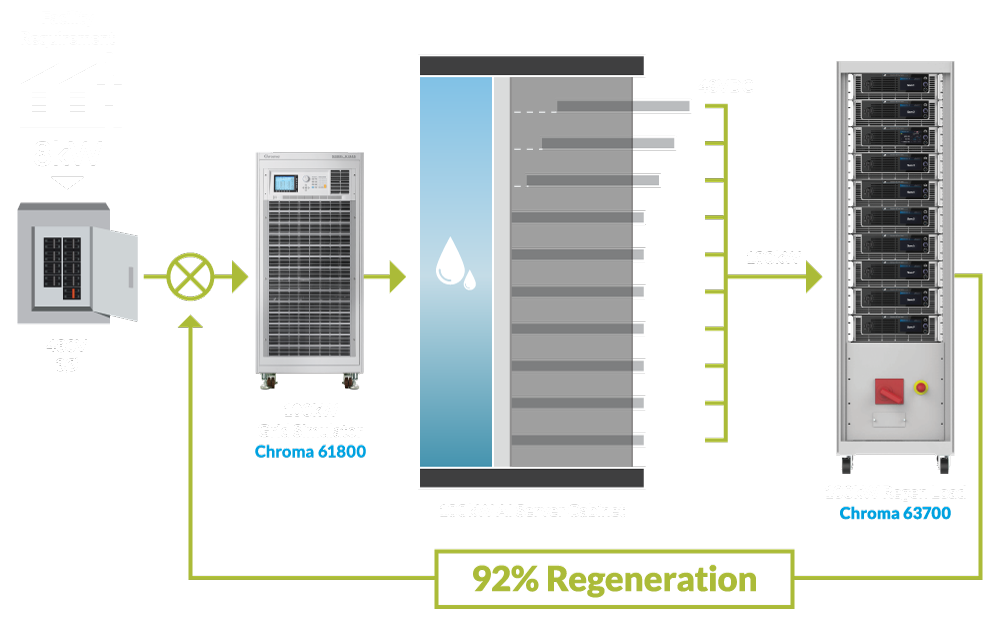
An onboard charger must convert AC power into controlled DC power, while the DC-DC converter maintains stable low-voltage output for vehicle electronics. These functions operate under changing loads, temperatures, input conditions, and communication commands. A reliable EV OBC DC-DC Converter Automated Test System should reproduce those conditions with precise source and load simulation. It should also measure efficiency, ripple, response time, protection behavior, insulation performance, and fault recovery.
This guide examines seven leading automated test systems for EV OBC and DC-DC converter development. The comparison considers test coverage, regenerative power capability, software workflow, measurement accuracy, safety functions, and integration with production lines. Relevant engineering expectations are informed by ISO 26262, ISO 21434, and established automotive validation practices. The United Nations Global Technical Regulation No. 20 also highlights the importance of electrical safety for electric vehicles.
Specifications alone can mislead. A fast test platform may still create bottlenecks through complex setup or weak reporting tools. Real laboratories face imperfect cables, thermal drift, calibration delays, and incomplete test models. Those details matter. The best system is not always the most powerful one. It is the platform that delivers repeatable evidence, clear traceability, and practical serviceability across design verification and production testing.
EV OBC and DC-DC Converter Automated Test Systems Explained
7 Best EV OBC DC-DC Converter Automated Test Systems?
EV OBC and DC-DC Converter Automated Test Systems Explained
Electric vehicle production is accelerating. The IEA reported nearly 14 million electric cars sold worldwide in 2023, representing about 18% of new-car sales. This growth raises testing pressure for onboard chargers and DC-DC converters. The best automated test systems should provide seven core capabilities: programmable AC input, regenerative DC loading, high-speed measurement, thermal simulation, communication testing, fault injection, and safety interlocks. These functions expose efficiency losses, unstable charging, voltage overshoot, and control-network errors before road testing.
A practical system must reproduce real conditions, not only clean laboratory waveforms. Engineers should test low battery voltage, grid distortion, sudden load changes, cold starts, and repeated power cycling. IEC 61851 and ISO 15118 requirements also make communication validation important. The U.S. Department of Energy has reported that power electronics strongly influence EV efficiency, so a small conversion loss can become a large range penalty across thousands of vehicles. Automated scripts improve repeatability, although they can miss unusual hardware behavior. Human review still matters.
Tips: Select a bidirectional supply and load when possible. Measure efficiency at light, medium, and peak loads. Add thermal sensors near switching devices. Confirm emergency shutdown independently. Store raw waveforms, not only pass-or-fail results. A test that runs faster is not always a better test. Include destructive-fault simulations only within controlled, approved limits. Test coverage should be reviewed after every design revision.
Key Evaluation Criteria for Selecting an Automated Test System
Selecting one of the 7 best EV OBC and DC-DC converter automated test systems requires more than checking maximum power. The International Energy Agency reported over 14 million electric car sales in 2023. That growth increases pressure for repeatable, traceable validation. Engineers should compare voltage range, current capability, power accuracy, response time, and regenerative-load performance. A system must reproduce charging faults, load changes, and thermal stress without damaging the device under test.
Automation quality matters just as much. Look for synchronized control of programmable supplies, electronic loads, insulation monitoring, temperature sensors, and communication interfaces. Test software should support reusable sequences, automatic limits, waveform recording, and detailed reports. These features support evidence-based decisions under ISO 26262 and ISO 16750-oriented development processes. The U.S. Department of Energy has also highlighted efficiency and power-density improvements as important factors in vehicle power electronics. Therefore, efficiency measurements need stable instruments and clear calibration records.
Safety deserves practical attention. Check emergency shutdown behavior, isolation monitoring, overvoltage protection, and safe discharge time. A fast system is not automatically a good system. Engineers should confirm its real measurement uncertainty, not only the brochure resolution. The checklist can still miss unusual interactions between control software and hardware. Small timing errors may become large field problems. Trial testing with representative OBC and DC-DC converter profiles is essential, even when the evaluation process feels complete.
Seven Leading System Types for EV Power Electronics Testing
Seven Leading System Types for EV Power Electronics Testing
Rising EV volumes are making OBC and DC-DC converter validation more demanding. The IEA’s Global EV Outlook 2024 recorded nearly 14 million electric-car sales in 2023, exceeding 18% of global car sales. BloombergNEF’s Electric Vehicle Outlook 2024 projected continued growth, increasing pressure on test capacity and traceable results.
Seven leading system types support this work. Functional test benches verify voltage regulation, efficiency, charging curves, and converter communication. Hardware-in-the-loop systems simulate batteries, grids, and vehicle controllers without risking a complete vehicle. Power hardware-in-the-loop platforms add real energy flow, exposing switching and control faults. Safety and compliance systems test insulation, isolation monitoring, leakage current, and fault responses. Thermal and environmental chambers reveal performance changes during cold starts, humidity, vibration, and heat soak. End-of-line systems provide rapid production checks, including dielectric strength, firmware, and connector inspection. Durability systems repeat load cycles, regeneration events, and abnormal operating conditions for long-term evidence.
Automation should capture raw waveforms, event logs, calibration data, and operator actions. Shortcuts are tempting. They can weaken confidence. A converter may pass a clean laboratory profile yet fail during unstable grid transitions. Test engineers should combine automated sequences with targeted human review, especially around sensor drift and thermal margins. Requirements should also map to relevant automotive safety, EMC, and functional testing standards. No single platform covers every risk, so test coverage must remain measurable, reviewable, and occasionally questioned.
7 Best EV OBC and DC-DC Converter Automated Test System Types
Representative nominal voltage points commonly covered when testing major EV power-electronics system types. Actual test limits depend on the DUT, safety design, and test-standard requirements.
Higher-voltage automated test systems are typically used for traction-battery-connected OBC and DC-DC converter validation, while 12 V and 48 V systems support auxiliary power architectures. A complete setup may combine power-source emulation, electronic-load control, communication testing, efficiency measurement, fault injection, and thermal monitoring.
Essential Test Functions, Hardware, and Software Requirements
A reliable EV OBC and DC-DC converter automated test system should be judged by its test coverage, not its brochure claims. The seven strongest systems usually combine programmable AC sources, high-voltage DC supplies, electronic loads, battery emulators, power analyzers, safety controllers, and automation software. They must reproduce charging profiles, input disturbances, load steps, efficiency changes, and fault conditions with repeatable timing.
Hardware needs accurate voltage and current measurement, fast switching, isolation monitoring, pre-charge control, and emergency shutdown circuits. A battery emulator should imitate changing state of charge, voltage limits, and internal resistance. The test rack also needs thermal sensors and communication interfaces, such as CAN or Ethernet. Small timing errors matter. A ten-millisecond delay can distort transient results.
Software should support automated sequences, limit checking, waveform capture, data logging, and report generation. Engineers should be able to adjust test limits without rewriting the entire program. A good platform stores calibration records and links every result to firmware, hardware, and operator details. This supports traceability during design reviews and compliance testing.
In practical work, unusual behavior often appears between normal test points. I have seen converters pass efficiency checks but fail during repeated wake-up cycles. No setup is perfect. Engineers should review failed tests manually, inspect sensor placement, and question unrealistic battery models. Clear interlocks, protected test recipes, and independent measurement channels make the system safer and more trustworthy.
How to Compare Safety, Accuracy, Scalability, and Total Cost
7 Best EV OBC DC DC Converter Automated Test Systems?
Choosing an automated test system for EV onboard chargers and DC-DC converters requires more than checking a feature list. Safety should be verified through galvanic isolation, high-voltage interlocks, emergency shutdowns, and controlled discharge circuits. The system should detect abnormal current within milliseconds. It must also record every fault condition clearly. A missing waveform can delay root-cause analysis.
Accuracy depends on calibrated voltage and current sensors, low-noise measurement paths, and repeatable load profiles. Check measurement uncertainty across temperature and power ranges. A system that performs well at 25°C may drift inside a hot test chamber. Dynamic tests should reproduce startup surges, load steps, ripple, and communication interruptions. Practical experience shows that attractive accuracy numbers can hide unstable fixtures or poor cable compensation.
Scalability affects both laboratory output and long-term cost. Modular channels, reusable test scripts, and automated report generation reduce engineering effort as programs expand. However, more channels can increase maintenance and integration complexity. A realistic total-cost review includes software licenses, calibration, operator training, spare components, energy consumption, and downtime. The cheapest purchase price is not always the lowest cost. I would also examine vendor documentation, service response, cybersecurity controls, and audit trails before approving a system. A perfect comparison is unrealistic, but a weighted scorecard exposes weak assumptions early.
FAQS
Compare voltage range, current capacity, power accuracy, response time, and regenerative-load performance. Maximum power alone is not enough.
It can check voltage regulation, efficiency, charging curves, and converter communication. Results should include raw waveforms and event logs.
It simulates batteries, grids, and vehicle controllers without using a complete vehicle. This helps expose control faults earlier.
It adds real energy flow to the test. Switching faults and unstable control behavior may become easier to observe.
Check emergency shutdown, isolation monitoring, overvoltage protection, leakage detection, and safe discharge time. Fast operation does not guarantee safety.
Cold starts, humidity, vibration, and heat soak can change converter performance. A stable room test may miss these effects.
It should record waveforms, limits, event logs, calibration data, reports, and operator actions. Missing records weaken traceability.
No. Software and hardware timing may interact unexpectedly. Representative trial testing remains necessary, even after the checklist looks complete.
Review measurement uncertainty, calibration records, efficiency stability, and sensor drift. Display resolution alone can be misleading.
No single platform covers every risk. Test coverage needs measurement, review, and occasional doubt. That last part is easy to skip.
Conclusion
An EV OBC DC-DC Converter Automated Test System is a coordinated platform designed to evaluate onboard chargers and DC-DC converters under realistic electrical, thermal, and control conditions. It can verify charging performance, power conversion efficiency, voltage and current regulation, communication behavior, protection responses, fault handling, and dynamic load performance. A well-designed system combines programmable power supplies, electronic loads, measurement instruments, switching equipment, temperature monitoring, and control software to create repeatable and traceable test sequences.
When selecting a system, engineers should compare measurement accuracy, safety protection, test coverage, automation capability, scalability, and total cost of ownership. Important considerations include isolation, emergency shutdown, overvoltage and overcurrent protection, data recording, reporting, calibration support, and compatibility with different voltage and power ranges. The most practical solutions support modular expansion, hardware-in-the-loop testing, automated endurance tests, and efficient analysis, allowing development and production teams to improve reliability while reducing manual effort and overall testing time.