
Technical Blog & Insights

Power Electronics & Test Technical Knowledge Base

Explore technical articles, industry insights, and power testing innovations from Chroma engineering experts.
0%

As battery packs become larger, faster, and more software-defined, test equipment must recover energy without compromising measurement quality. The Regenerative Battery Pack Test System is becoming a practical choice for manufacturers, laboratories, and vehicle developers seeking lower operating costs and reduced heat generation. In 2026, system selection will depend on pack voltage, current range, channel count, cooling design, and application requirements.

This guide examines the leading system types, including bidirectional DC regenerative platforms, regenerative AC grid simulators, modular multi-channel systems, and hardware-in-the-loop test benches. Each type supports a different engineering purpose. A high-voltage DC platform may suit endurance cycling and charge-discharge validation. An AC regenerative system may better represent inverter behavior and grid interaction. Modular equipment can simplify expansion, but configuration quality remains critical. More channels do not automatically mean better testing.

Safety remains central.

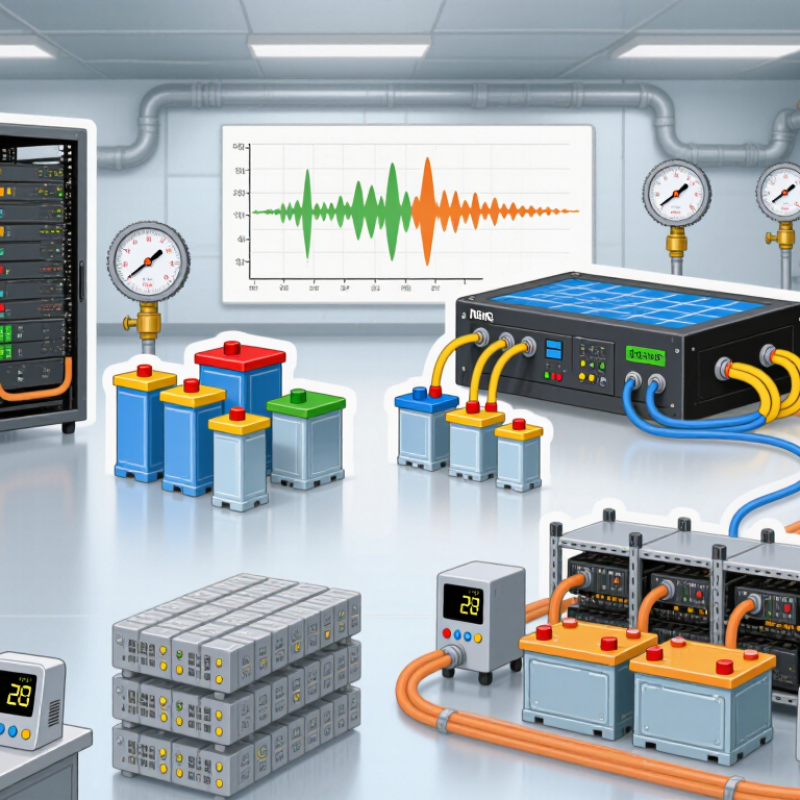
Experienced test engineers typically evaluate response time, power recovery efficiency, isolation monitoring, emergency shutdown functions, and data traceability. Calibrated voltage and temperature sensors help reveal weak cells before they become serious failures. Thermal chambers, coolant controls, and pressure monitoring add realistic conditions. Relevant requirements may include IEC 62660, ISO/IEC 17025 laboratory practices, and applicable transport or electrical safety rules. Their application depends on the test environment and regional compliance obligations.

Some market forecasts sound overly confident. Actual performance varies with software, installation quality, maintenance, and battery chemistry. This overview therefore focuses on verifiable design features rather than promotional claims. It also highlights practical trade-offs, including regeneration stability, harmonic control, fault handling, and total ownership cost. The best system is not always the most powerful. It is the one that produces trustworthy results, protects people, and fits the development workflow.
2026 Top Regenerative Battery Pack Test System Types?

What Is a Regenerative Battery Pack Test System?

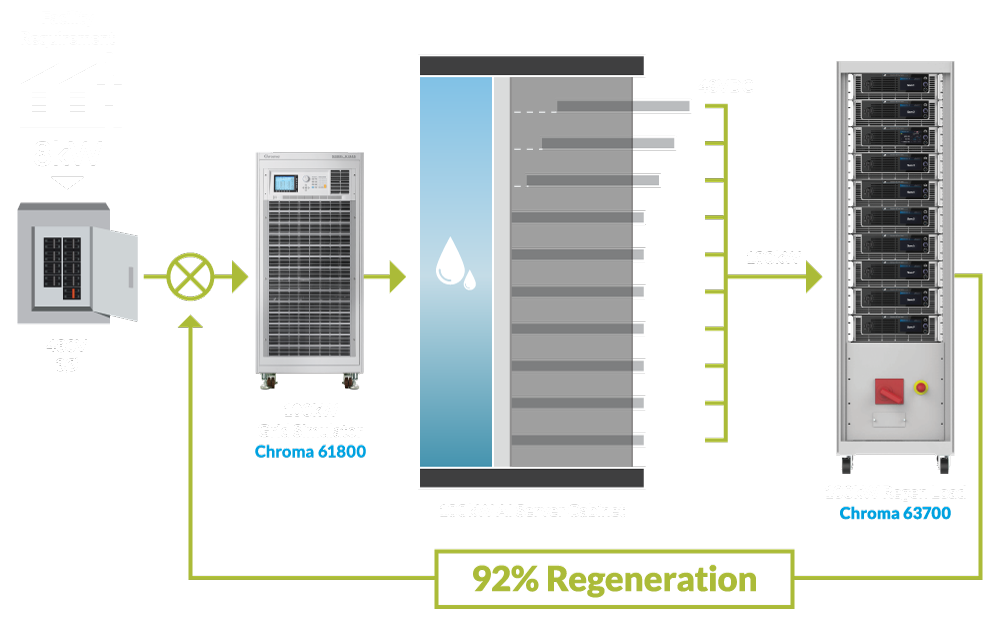
A regenerative battery pack test system evaluates charge, discharge, performance, and safety while recovering electrical energy. Unlike a conventional load bank, it sends much of the discharged energy back to a shared DC bus or utility interface. This reduces heat, energy waste, and facility cooling demands. The system usually includes a bidirectional power converter, measurement hardware, control software, thermal management, and protective circuits.

Common types include regenerative DC systems for high-current battery packs, AC regenerative systems for grid-connected testing, and modular systems for different voltage ranges. Some platforms focus on cycle-life testing, while others support pulse power, fault simulation, and fast charging studies. Accurate voltage, current, temperature, and insulation measurements are essential. A practical system should also respond quickly to overvoltage, overheating, communication loss, and unexpected polarity changes. Small errors matter.

Tips: Match the tester’s voltage and current range to the complete pack, not only its normal operating point. Verify energy-flow direction before connecting a valuable pack. Use calibrated sensors and independent emergency shutdowns. Keep test records detailed, including ambient temperature and cable condition. No setup is perfect. Real-world cables warm up, sensors drift, and software settings can be misunderstood. Reviewing these weak points often improves reliability more than adding another feature.

How Regenerative Battery Test Systems Operate

Regenerative battery test systems operate like controlled energy loops. A bidirectional DC converter sends current into a battery during charging, then captures returning energy during discharge. The recovered power flows back to the facility grid or a shared DC bus. Less heat is wasted in braking resistors.

A test controller sets voltage, current, temperature limits, and charge profiles. Sensors measure cell balance, insulation, efficiency, and response time. When the battery reaches its discharge target, the converter reverses direction within milliseconds. Modular racks suit cell and module testing, while high-power systems support complete battery packs. Some platforms also combine battery emulation with environmental chambers.

The market needs this efficiency. The International Energy Agency reported that global electric-vehicle battery demand exceeded 950 GWh in 2024, increasing roughly 25% year on year. That growth raises demand for repeatable pack validation and shorter laboratory cycles. The U.S. Department of Energy also emphasizes bidirectional power conversion as a route to reduce testing energy consumption.

Energy recovery is not automatically efficient. Converter losses, cooling loads, wiring resistance, and standby consumption still matter. A 95% recovery rate sounds strong, but poor thermal control can hide the remaining losses. Engineers should verify results with calibrated meters at both battery terminals and grid connections. I have found that simple test plans often miss transition behavior. That gap deserves more attention.

Key Types of Regenerative Battery Pack Test Systems

2026 Top Regenerative Battery Pack Test System Types?

Regenerative battery pack test systems return discharge energy instead of wasting it as heat. Their main types differ by power architecture, channel design, and testing purpose. The International Energy Agency’s Global EV Outlook 2025 reported that electric vehicle battery demand exceeded 1 TWh in 2024. That scale increases pressure on laboratories to test faster and recover more energy.

Bidirectional DC cyclers are common for pack charge, discharge, efficiency, and endurance testing. They provide precise current control and connect directly to high-voltage battery terminals. AC regenerative grid simulators add grid-interaction testing, including power-factor and voltage-response checks. Modular multi-channel systems suit research centers testing several packs or modules simultaneously. More channels improve utilization, but synchronization errors can complicate results.

Hybrid systems combine a regenerative cycler with thermal chambers, load emulators, or battery-management communication tools. They reproduce cold starts, rapid charging, and uneven cell behavior more realistically. BloombergNEF’s 2025 Battery Price Survey reported an average lithium-ion pack price of 108 dollars per kWh in 2024. Lower pack costs may encourage larger test programs, yet energy recovery alone does not guarantee lower operating costs. Conversion losses, cooling demand, calibration drift, and installation limits still matter. A practical selection should compare recovered-energy efficiency, voltage range, response speed, isolation, and service records. Some specifications look impressive on paper. Real pack testing can be less tidy.

Core Performance and Safety Testing Functions

2026 Top Regenerative Battery Pack Test System Types?

Core Performance and Safety Testing Functions

Regenerative battery pack test systems are moving toward bidirectional DC platforms, modular cyclers, and chamber-integrated systems. These systems return discharge energy to the grid or internal bus, reducing heat and operating waste. Their core functions include constant-current testing, pulse-power analysis, capacity measurement, and efficiency mapping. A reliable platform should control voltage, current, and sampling intervals with traceable calibration. Small drift matters.

Performance testing must reproduce realistic vehicle and storage conditions. Engineers can apply rapid charge pulses, deep discharge cycles, rest periods, and temperature changes. The system should record pack voltage, cell imbalance, current response, and energy recovery at millisecond resolution. A thermal chamber adds value when testing from cold starts to high-temperature operation. Data needs synchronized timestamps. Otherwise, useful patterns may disappear between channels.

Safety functions require independent limits, contactor checks, insulation monitoring, and emergency shutdown circuits. Overcharge, over-discharge, short-circuit, overload, and abnormal temperature tests should run with controlled escalation. Thermal runaway detection may combine gas, pressure, voltage, and temperature signals. Safety comes first. Experienced teams also verify sensor calibration before each campaign and preserve raw data for later review. A perfect waveform does not guarantee a safe pack. No system catches every failure, especially when wiring, fixtures, or software settings are overlooked. That weakness deserves deliberate review.

2026 Top Regenerative Battery Pack Test System Types: Core Performance and Safety Testing Functions

This functional coverage map compares four common battery-pack test-system architectures. A value of 1 indicates that the function is a primary design purpose of the system type; 0 indicates that it is normally handled by another dedicated system. Regenerative systems commonly combine bidirectional power flow, dynamic test profiles, energy recovery, and BMS communication, while safety-abuse systems focus on insulation, isolation, and destructive testing.

How to Select a Regenerative Battery Test System

Selecting a regenerative battery test system requires more than checking its maximum power rating. The system must match the battery pack’s voltage, current, capacity, and charging profile. A bidirectional DC system suits repeated charge-discharge cycles and captures returned energy efficiently. An AC regenerative platform is useful when testing onboard chargers, inverters, or grid-connected behavior. Modular channels help laboratories test several packs with different electrical limits.

Define the test workload before comparing equipment. A high-power pack may need rapid current changes, while a small module requires finer measurement resolution. Check voltage accuracy, current stability, response time, energy recovery efficiency, and channel isolation. Thermal interfaces also matter. A test system should communicate with temperature sensors, battery management systems, and emergency shutdown circuits. Independent calibration records and traceable measurement procedures strengthen the results.

Do not ignore software.

Look for programmable profiles, data logging, fault recording, and access controls. Engineers should verify whether the system can reproduce real driving pulses, not only constant-current cycles. Regenerative operation can reduce facility energy use, but efficiency claims need measured evidence under actual loads. A common mistake is choosing excess power without reviewing low-current accuracy. That choice may create expensive hardware with weak test resolution. I would also leave room for future pack chemistry and voltage changes, because specifications often age faster than expected.

2026 Top Regenerative Battery Pack Test System Types? - How to Select a Regenerative Battery Test System

System Type Typical Power Range Typical Voltage Range Typical Current Range Energy Recovery Method Best-Suited Battery Level Key Strengths Main Selection Considerations
Low-Voltage Regenerative Cycler 1–10 kW 0–100 V DC ±100–±300 A Bidirectional DC bus with energy returned to the grid or shared DC link Cells, modules, 12–48 V packs Low operating cost, compact footprint, suitable for laboratory development Check current ripple, low-voltage resolution, channel flexibility, and safety interlocks
Medium-Power Battery Pack Cycler 10–50 kW 0–800 V DC ±100–±500 A Regenerative four-quadrant power conversion Automotive and industrial modules or packs Balanced capability for performance testing, aging, and validation Match continuous power, peak power, voltage headroom, and thermal management capacity
High-Power EV Battery Test System 50–300 kW 0–1,000 V DC ±500–±1,000 A High-efficiency grid-regenerative AC/DC conversion Full EV and hybrid vehicle battery packs Supports fast charge, discharge, drive-cycle simulation, and abuse-pretest protocols Evaluate site power capacity, cooling requirements, transient response, and pack-level isolation protection
Multi-Channel Parallel Regenerative System Multiple channels; 5–100 kW per channel 0–1,000 V DC Up to ±1,000 A per channel Independent or shared regenerative DC architecture Multiple cells, modules, or packs tested simultaneously High test throughput, flexible channel allocation, and efficient laboratory utilization Verify channel synchronization, calibration consistency, expansion limits, and data-management capacity
High-Voltage Energy-Storage Test System 100–500 kW 0–1,500 V DC ±300–±1,000 A Bidirectional regenerative conversion with programmable grid interaction Stationary storage racks and large battery containers Suitable for long-duration cycling, power-rating verification, and grid-profile simulation Consider high-voltage clearance, insulation monitoring, fire protection, HVAC integration, and utility requirements
Regenerative Battery-in-the-Loop System 20–300 kW, application dependent 0–1,000 V DC ±200–±1,000 A Regenerative power stage coordinated with real-time simulation Battery packs connected to vehicle, inverter, or energy-management models Enables repeatable hardware-and-software validation under simulated operating conditions Assess real-time loop latency, model fidelity, communication interfaces, and control-system compatibility
Selection rule: Choose the system according to the battery’s maximum voltage, continuous and peak current, required test throughput, regenerative power capacity, measurement accuracy, thermal-management needs, safety architecture, and available facility power. Confirm that the test system’s voltage and current limits include sufficient operating margin above the battery’s maximum test conditions.

FAQS

What is a regenerative battery pack test system?

It tests battery packs while returning discharge energy to a grid or internal power bus. Less energy becomes waste heat. Recovery is never perfect.

What are the main types of regenerative test systems?

Common types include bidirectional DC cyclers, AC grid simulators, modular multi-channel systems, and hybrid platforms. Each suits different testing goals.

What does a bidirectional DC cycler test?

It controls charge and discharge current at high-voltage battery terminals. Engineers can measure capacity, efficiency, endurance, and pulse-power response.

When is an AC regenerative grid simulator useful?

It supports grid-interaction tests, including power factor and voltage response. These checks matter for storage systems connected to electrical networks.

Why choose a modular multi-channel system?

It can test several packs or modules at the same time. This improves laboratory utilization. Synchronization errors can still distort comparisons.

What advantages do hybrid systems provide?

Hybrid systems may combine a cycler with thermal chambers, load emulators, or battery-management communication tools. They can reproduce cold starts and rapid charging.

Which performance measurements should the system record?

It should measure voltage, current, capacity, efficiency, cell imbalance, temperature, and recovered energy. Sampling should support millisecond-level event analysis.

What safety functions are essential?

Important functions include independent limits, contactor checks, insulation monitoring, and emergency shutdown circuits. Tests should control overcharge, overload, and abnormal temperature conditions.

How can test data remain reliable?

Use traceable calibration, synchronized timestamps, and preserved raw data. Check sensors before each campaign. A perfect waveform proves very little alone.

What should engineers compare before selecting a system?

Compare voltage range, current control, response speed, isolation, recovery efficiency, cooling demand, calibration stability, and service capability. Paper specifications can mislead.

Conclusion

A Regenerative Battery Pack Test System is an advanced platform designed to evaluate battery packs while returning recovered electrical energy to the power network or local source instead of wasting it as heat. It controls charge and discharge cycles with precision, measures voltage, current, temperature, capacity, efficiency, and power response, and helps engineers understand battery behavior under realistic operating conditions. During testing, the system can simulate driving, charging, standby, and abnormal load profiles while monitoring pack-level communication and protection functions.

Key types include bidirectional DC systems, modular multi-channel platforms, high-power systems for vehicle battery packs, and flexible systems for research and production testing. Core functions may include performance verification, cycle-life testing, energy regeneration, thermal monitoring, insulation checks, overvoltage and overcurrent protection, and fault-response evaluation. When selecting a system, users should consider voltage and current range, regenerative efficiency, channel scalability, measurement accuracy, safety controls, software flexibility, data management, maintenance needs, and compatibility with the battery pack’s chemistry and application requirements.

Cassandra

Cassandra

Cassandra is a dedicated marketing professional with a profound expertise in the company’s products and services. With a keen understanding of market trends and customer needs, she plays a pivotal role in crafting compelling content for the company’s professional blog, where she regularly shares......