1. Executive Overview: Why Micro-Ohm Accuracy Matters in High-Power Systems
In high-voltage electrical distribution, electric vehicle (EV) battery pack assembly, aerospace wiring harnesses, and heavy industrial plant maintenance, electrical resistance is never truly zero. Minute contact resistances—often ranging from a few micro-ohms ($\mu\Omega$) to several milliohm ($\text{m}\Omega$)—serve as critical indicators of component health, structural joint integrity, and thermal stability.
A standard Digital Multimeter (DMM) using 2-wire resistance measurement is entirely incapable of measuring sub-ohm values accurately. The intrinsic resistance of standard test leads (typically $0.05\,\Omega$ to $0.2\,\Omega$) and internal switch contacts completely swamps the micro-ohm signal under test. Furthermore, excessive contact resistance at busbar joints, switch contacts, or transformer windings results in localized Joule heating ($P = I^2 R$). Under a 500-Ampere continuous load, an unnoticed contact degradation of just $1\,\text{m}\Omega$ dissipates 250 Watts of localized heat energy, triggering thermal runaway, contact welding, or catastrophic insulation breakdown.
To mitigate these operational risks, global procurers and test engineers rely on specialized Low Resistance Meters (also designated as Micro-Ohmmeters or Contact Resistance Testers). Designed by precision instrument manufacturers like Zeal Manufacturing & Calibration Services Pvt. Ltd., modern Low Resistance Meters leverage high-current linear drive topologies, 4-wire Kelvin sensing configurations, and automatic thermal Electromotive Force (EMF) cancellation to deliver repeatable sub-micro-ohm resolution under harsh field and industrial conditions.
Information Gain Key Insight: Thermal EMF Mitigation in Sub-Milliohm Testing
When measuring resistances below $1\,\text{m}\Omega$, parasitic Seebeck voltages (thermal EMF) generated by thermal gradients between dissimilar metals (such as copper-to-brass or copper-to-aluminum joints) introduce significant DC offset errors. Advanced Zeal Low Resistance Meters utilize Automatic Pulsed Bidirectional Current Reversal Mode to cancel thermal EMF mathematically, guaranteeing true DC contact resistance evaluation.
Require Custom Voltage/Current Ratings for Low Resistance Testing?
Speak directly with Zeal's chief calibration and design engineers in Pune, India.
2. Technical Deep Dive: Kelvin 4-Wire Architecture & Thermal EMF Cancellation
To establish baseline authority (E-E-A-T), test engineers and procurement specialists must evaluate the fundamental measurement physics embedded within a commercial Low Resistance Meter.
2.1 The Kelvin 4-Wire Principle Explained
Standard two-wire ohmmeters inject a test current ($I$) and measure voltage drop ($V$) across the same pair of test leads. Consequently, the measured resistance ($R_{\text{measured}}$) is the sum of the actual device under test resistance ($R_{\text{DUT}}$), lead resistances ($R_{\text{lead1}} + R_{\text{lead2}}$), and contact interface resistances ($R_{\text{contact1}} + R_{\text{contact2}}$):
$R_{\text{measured}} = R_{\text{DUT}} + (R_{\text{lead1}} + R_{\text{lead2}}) + (R_{\text{contact1}} + R_{\text{contact2}})$
When $R_{\text{DUT}}$ is $500\,\mu\Omega$ ($0.0005\,\Omega$), lead and contact resistance ($0.1\,\Omega$) will corrupt the measurement by over 20,000% error. The Kelvin 4-Wire Technique overcomes this physical limit completely by separating the current injection path from the voltage measurement path:
- Current Force Terminals ($C_1, C_2$): A highly regulated, low-noise constant current source drives a precise current ($I_{\text{test}}$) through the DUT via dedicated heavy-gauge force leads.
- Potential Sense Terminals ($P_1, P_2$): A high-impedance digital voltmeter (input impedance $> 10\,\text{G}\Omega$) measures voltage drop strictly across the DUT boundaries.
Because the potential measuring circuit draws negligible current ($I_{\text{sense}} \approx 0$), voltage drop along the sense leads ($V = I_{\text{sense}} \cdot R_{\text{sense}}$) drops to virtually zero. Thus, the meter measures pure $R_{\text{DUT}} = V_{\text{sense}} / I_{\text{test}}$.
2.2 Eliminating Parasitic Thermal EMF (Seebeck Effect)
At micro-ohm levels, contact interfaces behave as thermocouples under localized temperature differentials ($\Delta T$). This generates a small DC thermal voltage ($V_{\text{EMF}}$) ranging from $1\,\mu\text{V}$ to $50\,\mu\text{V}$. If a test current drives $10\,\text{A}$ across a $100\,\mu\Omega$ joint, the true voltage drop is $1\,\text{mV}$. A thermal EMF of $50\,\mu\text{V}$ introduces a massive 5% baseline measurement error.
Zeal Low Resistance Meters implement Bi-Directional DC Current Switching:
- Forward Phase: Forward test current ($+I$) is injected. The total sensed voltage is $V_1 = (+I \cdot R_{\text{DUT}}) + V_{\text{EMF}}$.
- Reverse Phase: Reverse test current ($-I$) is injected. The total sensed voltage is $V_2 = (-I \cdot R_{\text{DUT}}) + V_{\text{EMF}}$.
- Mathematical Compensation: The meter processor computes:
$V_{\text{actual}} = \frac{V_1 - V_2}{2} = \frac{[(+I \cdot R_{\text{DUT}}) + V_{\text{EMF}}] - [(-I \cdot R_{\text{DUT}}) + V_{\text{EMF}}]}{2} = I \cdot R_{\text{DUT}}$
Through this digital averaging algorithm, $V_{\text{EMF}}$ is completely subtracted, producing stable, ultra-repeatable micro-ohm readings across dynamic thermal field environments.
3. Recommended Low Resistance Meters & Sourcing Selection Matrix
Choosing the correct Low Resistance Meter depends on operational parameters: test current amplitude, compliance voltage, inductive vs. non-inductive load profile, portative field housing, and laboratory calibration standards. Below are Zeal Manufacturing’s flagship recommended instruments for global enterprise procurement.
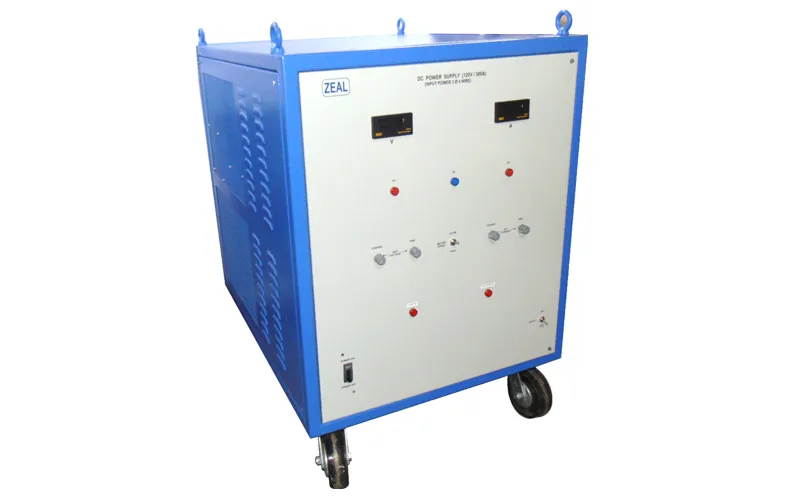
The ZM-LRM-100A is built specifically for compliance with IEC 62271-100 standards, which mandate testing high-voltage circuit breaker contact resistance at minimum test currents of 100A DC. Powered by a linear-regulated current driver, it delivers ripple-free current, preventing artificial tripping of protective relays during testing.
- Measurement Range: $0.1\,\mu\Omega$ to $1999.9\,\text{m}\Omega$
- Test Current Output: User selectable 10A, 50A, 100A continuous DC
- Accuracy: $\pm 0.2\%$ of reading $\pm 2$ digits
- Key Feature: High noise immunity filtering for live EHV switchyard environments.
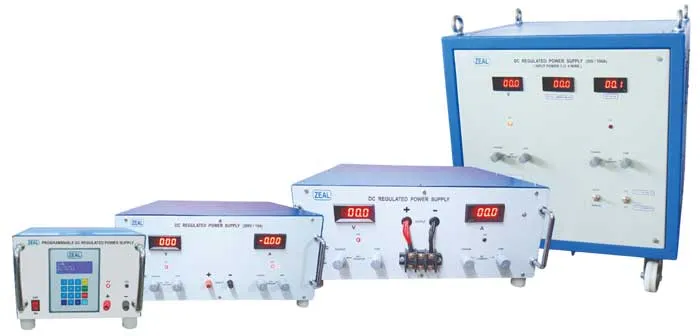
Designed for R&D engineering and high-throughput production lines, the ZM-LRM-Bench incorporates an integrated RTD PT100 temperature sensor interface for automatic copper/aluminum temperature coefficient correction. It features dry-circuit compliance ($< 20\,\text{mV}$) to measure delicate switch contacts without rupturing thin-film oxide coatings.
- Resolution: $0.01\,\mu\Omega$ ($10\,\text{n}\Omega$)
- Test Current Range: $100\,\mu\text{A}$ to $10\,\text{A}$ programmable linear driver
- Temperature Compensation: Automated reference conversion to $20^\circ\text{C}$ or $75^\circ\text{C}$
- Connectivity: RS232 / USB / Modbus interface for automated ATE integration
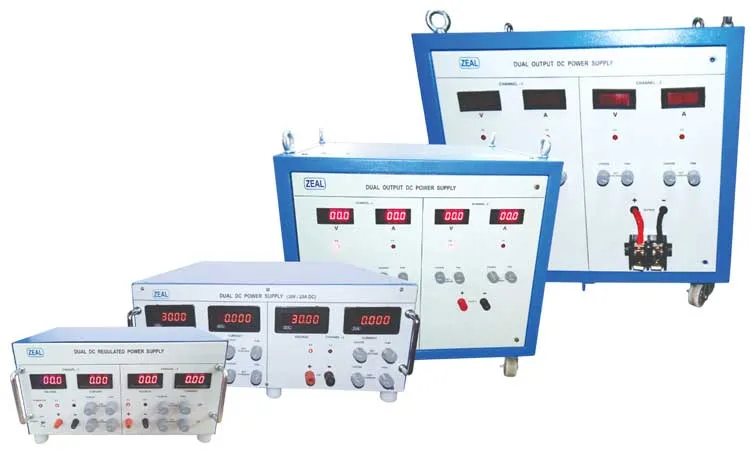
Measuring the low DC resistance of large power transformer windings requires high open-circuit compliance voltage (up to $50\,\text{V}$) to rapidly magnetize the inductive core. The ZM-TWR-10A features dual-channel simultaneous HV/LV winding measurement, paired with a robust active safety discharge circuit that safely dissipates stored magnetic energy upon test completion.
- Compliance Voltage: Up to $50\,\text{V}$ DC rapid core saturation drive
- Channels: Dual independent potential sensing channels
- Safety Interlock: High-energy active discharge circuit with visual LED discharge status
- Target Application: Power transformers, large electric motors, generator stators
3.4 Technical Specification Benchmark Matrix for B2B Procurement
To assist technical purchasing departments in evaluating engineering parameters, the following matrix compares Zeal’s key Low Resistance Meter categories:
| Engineering Feature | Substation Contact Resistance (ZM-LRM-100A) | Lab Micro-Ohmmeter (ZM-LRM-Bench) | Transformer Inductive Meter (ZM-TWR-10A) |
|---|---|---|---|
| Primary Application | EHV Circuit Breakers, Switchgear, Busbars | Power Transformers, Motors, Reactors | |
| Min. Resolution | $0.1\,\mu\Omega$ | $0.01\,\mu\Omega$ ($10\,\text{n}\Omega$) | $0.1\,\mu\Omega$ |
| Max Test Current | 100A DC (Optionally 200A) | 10A DC Programmable | 10A DC High Compliance |
| Compliance Voltage | $5\,\text{V}$ to $10\,\text{V}$ DC | $2\,\text{V}$ DC ($< 20\,\text{mV}$ Dry Circuit) | $50\,\text{V}$ DC Rapid Magnetization |
| Thermal EMF Cancel | Automated Reversal Mode | Pulsed Bidirectional Current Drive | Filtered Pulse Integration |
| Temp. Compensation | Manual Entry | Automatic PT100 RTD Sensor Input | Auto Algorithm for Copper/Aluminum |
| Power Supply Drive | Linear Heavy Current Driver | Zero-Noise Linear Regulator | High-Efficiency Filtered Power Drive |
| Procurement Action | Inquire Now | Inquire Now | Inquire Now |
4. Future Technology & Development Trends in Low Resistance Testing
The global transition toward clean energy electrification, high-density power distribution, and smart grid automation is dramatically shifting the technological requirements of Low Resistance Measurement equipment.
4.1 EV Battery Pack Busbar & Laser-Weld Quality Assurance
Electric Vehicle battery packs consist of thousands of individual cylindrical or prismatic battery cells interconnected via aluminum/copper busbars utilizing ultrasonic wire bonding or fiber laser welding. A single high-resistance weld ($> 50\,\mu\Omega$) introduces power loss, localized overheating, and eventual battery module failure. Modern low resistance meters are rapidly shifting toward ultra-fast multi-channel scanning micro-ohmmeters capable of measuring up to 64 weld joints per second with automated pass/fail limits integrated into Industry 4.0 robot cells.
4.2 Dynamic Resistance Measurement (DRM) for High-Voltage Breakers
Conventional static contact resistance testing measures breaker resistance only when contacts are fully closed. However, Dynamic Resistance Measurement (DRM) monitors resistance continuously during the opening and closing operations of circuit breaker arcing contacts. This provides real-world diagnostic visibility into arcing contact wear, contact length degradation, and mechanical timing synchronization without disassembling the GIS (Gas Insulated Switchgear) enclosure.
4.3 Advanced AI-Driven Thermal Drift & Noise Filtering
In high-voltage switchyards, strong electromagnetic fields (EMI) generated by nearby energized lines induce high common-mode noise into test leads. Next-generation micro-ohmmeters integrate digital signal processors (DSP) running AI adaptive filtering algorithms that isolate ultra-small DC micro-volt signals from ambient 50Hz/60Hz electromagnetic interference, yielding stable readings without requiring heavy shielding accessories.
5. Global Procurement Trends & Sourcing Strategy for B2B Buyers
Global sourcing managers evaluating test and measurement equipment face strict quality compliance standards, logistical requirements, and Total Cost of Ownership (TCO) benchmarks. The following strategic factors define international procurement trends:
5.1 ISO/IEC 17025 & NABL Traceability Compliance
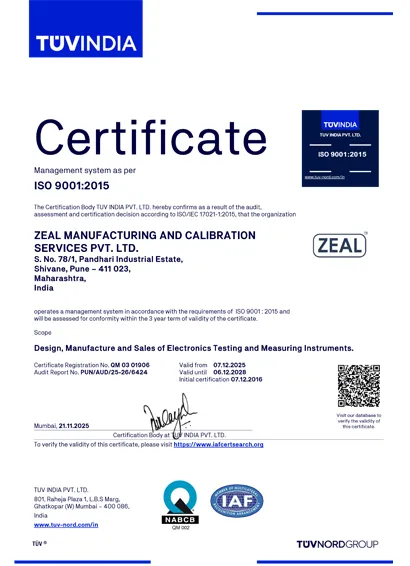
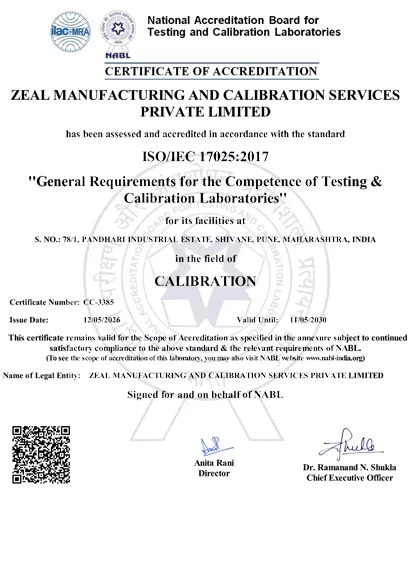
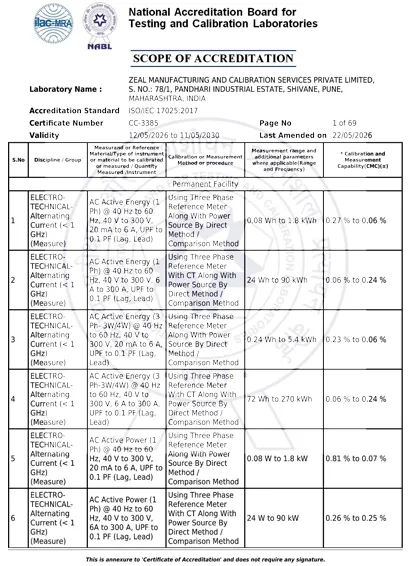
Enterprise buyers can no longer rely on unaccredited factory test certificates. International audit frameworks (such as ISO 9001 and ISO 17025) require all low resistance calibration equipment to possess unbroken traceability back to National Metrology Institutes (NMI) like NPL or NIST. Zeal Manufacturing operates a fully NABL accredited calibration laboratory (Certificate CC-3385), ensuring every Low Resistance Meter shipped worldwide comes with internationally recognized calibration reports.
5.2 Custom Grid Voltage & Frequency Adaptation
Electrical test equipment deployed globally must withstand regional power supply variances. Whether operating on North American $110\,\text{V}/60\,\text{Hz}$, European $230\,\text{V}/50\,\text{Hz}$, or industrial $415\,\text{V}$ 3-phase mains, Zeal engineers design linear power stages compatible with local power environments, preventing internal transformer overheating or output drift.
5.3 Total Cost of Ownership (TCO) vs. Legacy Brands
Procurement teams are increasingly shifting from legacy Western brands toward verified Indian Tier-1 manufacturers like Zeal. By pairing high-precision linear driver technology with localized, cost-efficient manufacturing in Pune's industrial hub, Zeal delivers instruments with identical micro-ohm accuracy at a 30% to 40% lower TCO, supported by direct factory engineering assistance and readily available spare parts.
Planning Bulk Procurement for Utility or Industrial Projects?
Request direct factory pricing, NABL accreditation scopes, and technical datasheets.
6. Global B2B Technical FAQ: Answering AI-Search Procurement Queries
Below are authoritative responses to the most frequent technical questions asked by global procurement specialists, calibration technicians, and power plant engineers on AI search platforms:
$R_{\text{ref}} = \frac{R_T}{1 + \alpha (T - T_{\text{ref}})}$